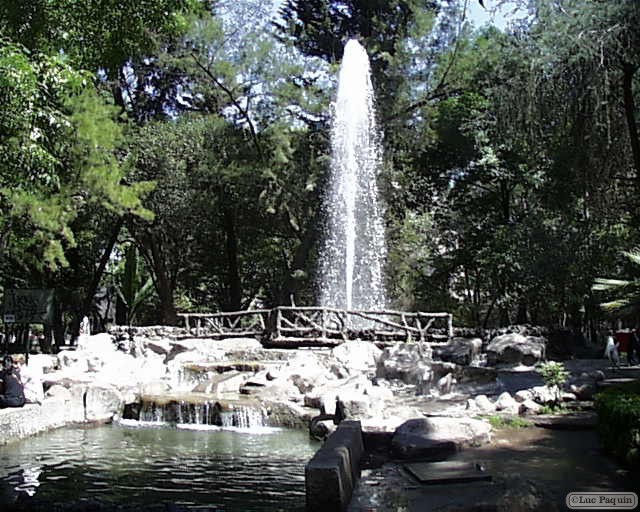
Parque México, March 14, 2004

Parque Mexico Mk01

Year: 2004 (March 14, 2004)

11″ x 8.5″

Media: Canon® Pro Platinum High Gloss Photo Paper

Printers: Canon® PIXMA

Color

Art: Photo

Artist: Luc Paquin

Parque México

The Parque México, also known as the Parque San Martín, is a large urban park located in Colonia Hipódromo in the Condesa area of Mexico City. It is recognized by its Art Deco architecture and decor as well as being one of the larger green areas in the city. The park was built in the 1920s, when its surrounding neighborhood of Colonia Hipódromo was being established. It is the former site of a horse race track on an hacienda that belonged to the Countess of Miravalle. When this part of the hacienda was being partitioned and redeveloped into a housing area, environmental laws at the time did not permit housing on the former track. Instead it was turned into the current park. Today, Parque México is not only the center of Colonia Hipódromo, it is also the center of the entire La Condesa section of the city.

Luc

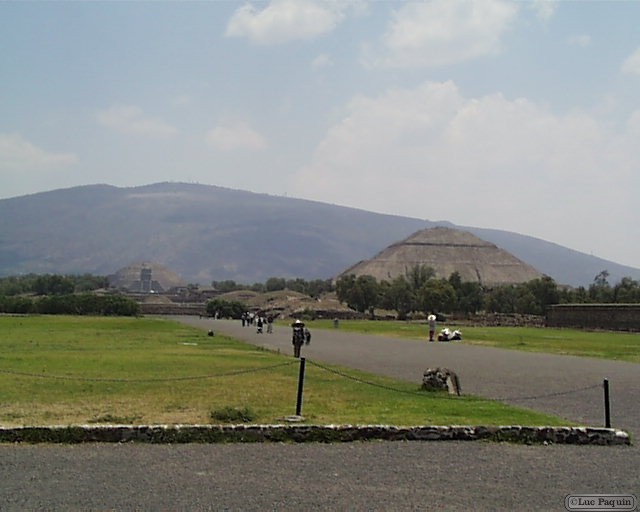
Teotihuacan, June 02, 2005

Teotihuacan Mk01

Year: 2005 (June 02, 2005)

11″ x 8.5″

Media: Canon® Pro Platinum High Gloss Photo Paper

Printers: Canon® PIXMA

Color

Art: Photo

Artist: Luc Paquin

Teotihuacan

Teotihuacan, also written Teotihuacán, was a pre-Columbian Mesoamerican city located in a sub valley of the Valley of Mexico, located in the State of Mexico 30 miles northeast of modern-day Mexico City, known today as the site of many of the most architecturally significant Mesoamerican pyramids built in the pre-Columbian Americas. Apart from the pyramids, Teotihuacan is also anthropologically significant for its complex, multi-family residential compounds; the Avenue of the Dead; and the small portion of its vibrant murals that have been exceptionally well-preserved. Additionally, Teotihuacan exported a so-called “Thin Orange” pottery style and fine obsidian tools that garnered high prestige and widespread utilization throughout Mesoamerica.

Luc

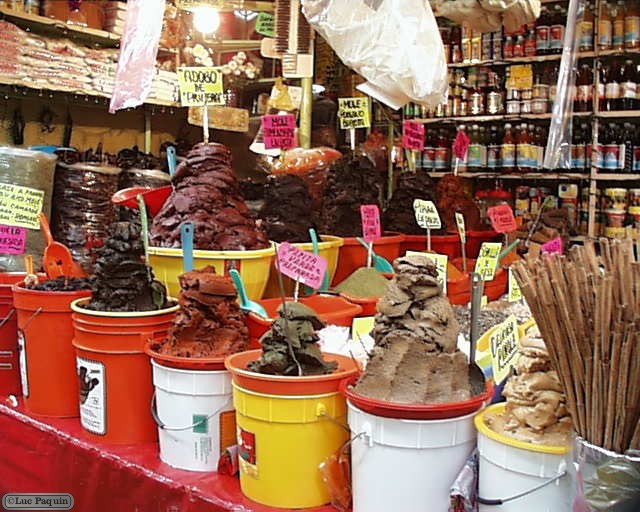
Mercado de Jamaica, March 18, 2004

Jamaica Mk01

Year: 2004 (March 18, 2004)

11″ x 8.5″

Media: Canon® Pro Platinum High Gloss Photo Paper

Printers: Canon® PIXMA

Color

Art: Photo

Artist: Luc Paquin

Mercado de Jamaica

Mercado Jamaica is one of Mexico City’s traditional public markets where various vendors sell their wares in an established location. This market was inaugurated in the 1950s as part of efforts to modernize the markets in the area. The market is located on the corner of Congreso de la Union and Avenida Morelos, just southeast of the historic center of the city. Although it is one of the main markets for groceries, produce and meat, it is best known for its flowers and ornamental plants. There are 1,150 stands dedicated to the selling of cut flowers, flower arrangements, ornamental plants and accessories such as flowerpots. The market offers about 5,000 types of flowers and plants, mostly foreign, but there is a number of native Mexican species available, including some gathered directly from the wild.

Mole

All mole preparations begin with one or more types of chili pepper. The classic moles of central Mexico and Oaxaca, such as mole poblano and mole negro, include two or more of the following types: ancho, pasilla, mulato and chipotle. Other ingredients can include black pepper, achiote, guaje, cumin, cloves, anise, tomatoes, tomatillos, garlic, sesame seeds, dried fruit, hoja santa and many others. Mole poblano has an average of 20 ingredients; mole almendrado has an average of 26, and Oaxacan moles can have over 30. Chocolate, if used, is added at the end of cooking. The ingredients of mole can be grouped into five distinct classes: chiles, sour (tomatillos), sweet (dried fruits and sugar), spices, and thickeners (nuts and tortillas).

Luc

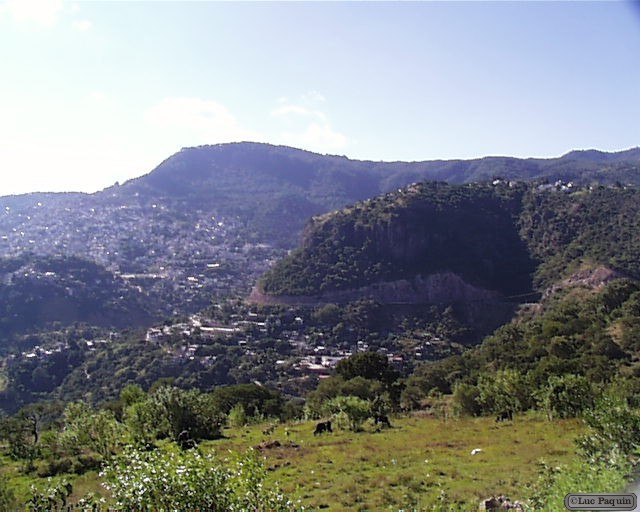
Taxco, Mexico, November 2003

Taxco Mk02

Year: 2003 (November 2003)

11″ x 8.5″

Media: Canon® Pro Platinum High Gloss Photo Paper

Printers: Canon® PIXMA

Color

Art: Photo

Artist: Luc Paquin

Taxco

The climate ranges from hot and relatively moist in the flatlands to warm and relatively moist in the higher mountainous areas. Average temperatures for the year range between 18 and 20 C. Most of the municipality is covered in semi-tropical foliage which has a tendency to drop leaves during the dry season from October to May. In the highest elevations, pine and oak forests can be found.

The city of Taxco de Alarcón is the seat and the governing authority for 141 other communities, the largest of which are Tlamacazapa, Acamixtla, Acuitlalpan, Atzala and Taxco el Viejo. The total population of the municipality is 98,854, and the territory measures 347km2. Less than 3% of the population of the municipality is of pure indigenous ethnicity according to the Census. The two indigenous languages spoken here are Nahuatl and Zapotec. It borders with the municipalities of Tetipac, Iguala, Teloloapan, Buena Vista de Cuellar, Pedro Ascencio Alquisiras and Ixcateopan as well at the state of Puebla.

The terrain has an average altitude of 1,752 meters, which ranges from 1,000 meters to 2,300 meters. Seventy five percent of its territory consists of rugged mountains, twenty percent is semi-flat and only five percent is flat. The flatter lands are in the lower elevations. The major rivers here are the Taxco and the Temixco, with a number of arroyos that feed into them during the rainy season. There is a lake that is filled only part of the year and a small dam called San Marcos.

Most of the municipality’s natural resources lie underground in the form of gold, silver, lead, copper, and zinc deposits. Above ground a number of species of timber trees exist as well as areas for agriculture and livestock. Principle crops grown in the municipality are corn, peanuts, luffa sponges, beans and tomatillos. Livestock consists of pigs, goats, horses and some fowl. Most of the industry here revolves around mining precious metals as well as the manufacture of drywall and masonry materials.

Luc

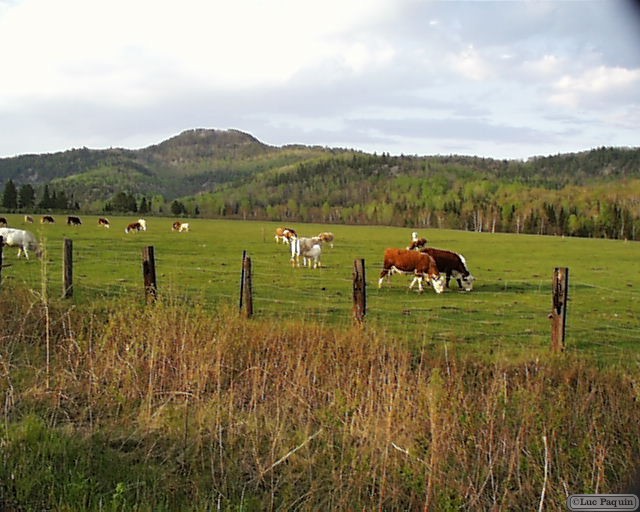
Brébeuf, Quebec, May 2002

Brébeuf Mk01

Year: 2002 (May 2002)

11″ x 8.5″

Media: Canon® Pro Platinum High Gloss Photo Paper

Printers: Canon® PIXMA

Color

Art: Photo

Artist: Luc Paquin

Brébeuf

Brébeuf is a parish municipality in the Laurentides region of Quebec, Canada, part of Les Laurentides Regional County Municipality. It is located along the Rouge River (Rivière Rouge), near Mont-Tremblant.

Dairy cattle (also called dairy cows or milk cows) are cattle cows bred for the ability to produce large quantities of milk, from which dairy products are made. Dairy cows generally are of the species Bos taurus.

Historically, there was little distinction between dairy cattle and beef cattle, with the same stock often being used for both meat and milk production. Today, the bovine industry is more specialized and most dairy cattle have been bred to produce large volumes of milk.

Luc

Zoológico de Chapultepec, October 30, 2003

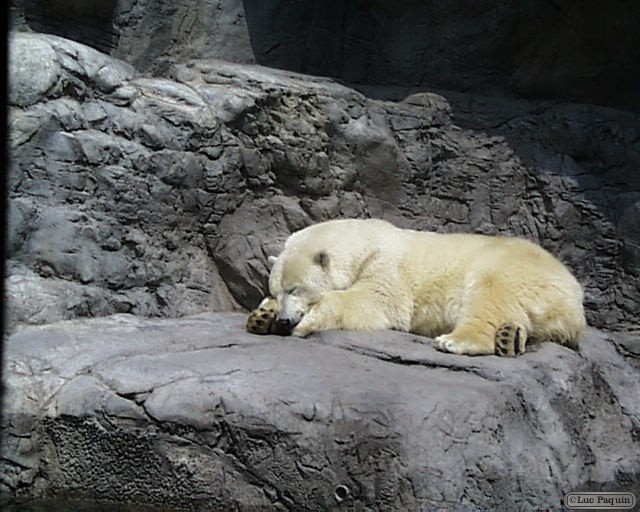
Polar Bear Mk01

Year: 2003 (October 30, 2003)

11″ x 8.5″

Media: Canon® Pro Platinum High Gloss Photo Paper

Printers: Canon® PIXMA

Color

Art: Photo

Artist: Luc Paquin

Zoológico de Chapultepec

Chapultepec Zoo is a zoo located in Chapultepec Park; it is one of four zoos near Mexico City, and the best known Mexican zoo. It was founded July 6, 1923 by Mexican biologist Alfonso Luis Herrera using donations from private citizens and governmental funds from the Ministry of Agriculture and Development, and also with funds from the Society of Biological Studies. The zoo is rather popular after a recent renovation begun in 1992 which took two years; estimates of its popularity range from 5.5 million visitors per year to as much as 8 million, who all come to see its large collection of almost 2000 animals from more 200 different species. It is the second largest zoo in Mexico after the Guadalajara Zoo in Guadalajara, Jalisco.

Polar bear

The polar bear (Ursus maritimus) is a carnivorous bear whose native range lies largely within the Arctic Circle, encompassing the Arctic Ocean, its surrounding seas and surrounding land masses. It is a large bear, approximately the same size as the omnivorous Kodiak bear (Ursus arctos middendorffi). A boar (adult male) weighs around 350-700 kg, while a sow (adult female) is about half that size. Although it is the sister species of the brown bear, it has evolved to occupy a narrower ecological niche, with many body characteristics adapted for cold temperatures, for moving across snow, ice, and open water, and for hunting the seals which make up most of its diet. Although most polar bears are born on land, they spend most of their time at sea. Their scientific name means “maritime bear”, and derives from this fact. Polar bears hunt their preferred food of seals from the edge of sea ice, often living off fat reserves when no sea ice is present.

The polar bear is classified as a vulnerable species, with eight of the nineteen polar bear subpopulations in decline. For decades, large scale hunting raised international concern for the future of the species but populations rebounded after controls and quotas began to take effect. For thousands of years, the polar bear has been a key figure in the material, spiritual, and cultural life of Arctic indigenous peoples, and polar bears remain important in their cultures.

Luc

Taxco, Mexico, November 2003

Taxco Mk01

Year: 2003 (November 2003)

11″ x 8.5″

Media: Canon® Pro Platinum High Gloss Photo Paper

Printers: Canon® PIXMA

Color

Art: Photo

Artist: Luc Paquin

Taxco

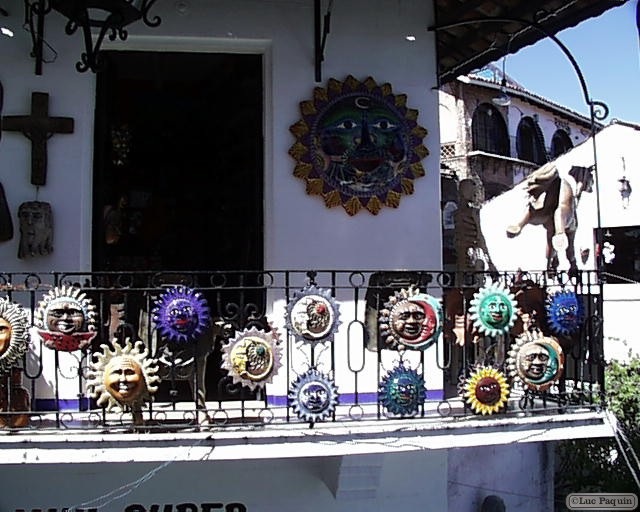
Taxco de Alarcón (usually referred to as simply “Taxco”) is a small city and administrative center of a municipality of the same name (Taxco de Alarcón) located in the Mexican state of Guerrero. The name Taxco is most likely derived from the Nahuatl word tlacheco, which means “place of the ballgame.” However, one interpretation has the name coming from the word tatzco which means “where the father of the water is,” due to the high waterfall near the town center on Atatzin Mountain. “De Alarcón” is in honor of writer Juan Ruiz de Alarcón who was a native of the town. Like many municipalities in central Mexico, the municipality’s coat-of-arms is an Aztec glyph. This glyph is in the shape of a Mesoamerican ballcourt with rings, players and skulls, derived from the most likely source of Taxco’s name.

The city is heavily associated with silver, both with the mining of it and other metals and for the crafting of it into jewelry, silverware and other items. This reputation, along with the city’s picturesque homes and surrounding landscapes have made tourism the main economic activity as the only large-scale mining operation here is coming to a close.

Taxco is located in the north-central part of the state, 36 kilometres from the city of Iguala, 135 km from the state capital of Chilpancingo and 170 km southwest of Mexico City. The city was named one of Mexico’s “Pueblos Mágicos” (Magical Towns) due to the quality of the silverwork, the colonial constructions and the surrounding scenery.

Luc

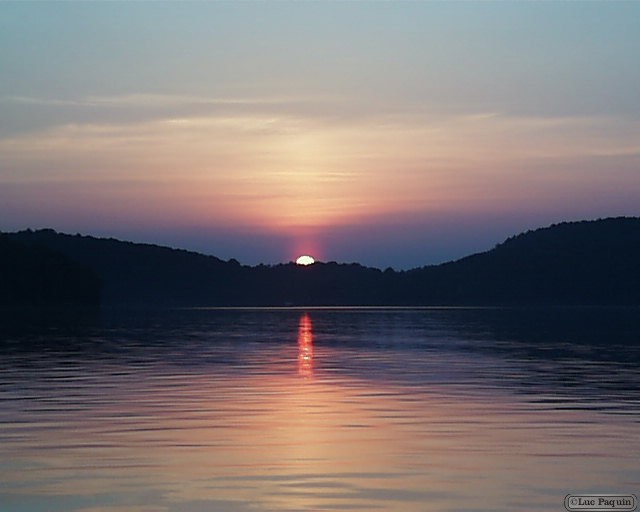
Lac des Trois Montagnes, 2002

Lac Des Trois Montagnes Mk12

Year: 2002

11″ x 8.5″

Media: Canon® Pro Platinum High Gloss Photo Paper

Printers: Canon® PIXMA

Color

Art: Photo

Artist: Luc Paquin

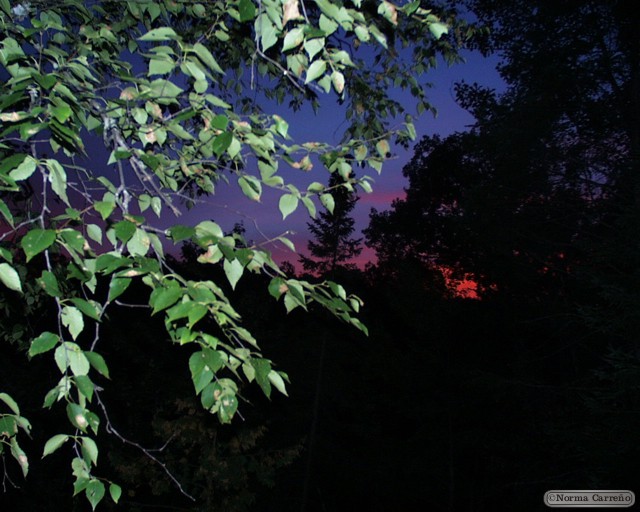
Lac des Trois Montagnes, La Conception, QC, Canada. Sunset.

Luc