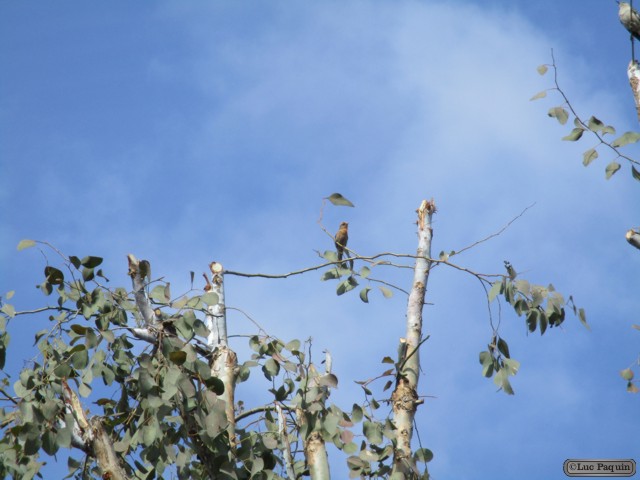
Rocking Horse Ln, Oceanside, May 13, 2015

House Finch 5 Mk01

Year: 2015 (May 13, 2015)

11″ x 8.5″

Media: Canon® Pro Platinum High Gloss Photo Paper

Printers: Canon® PIXMA

Color

Art: Photo

Artist: Luc Paquin

Rocking Horse Ln

House Finch

The house finch (Haemorhous mexicanus) is a bird in the finch family Fringillidae. It is found in North America, where its range has increased since the mid-twentieth century, and in the islands of Hawaii. This species and the other “American rosefinches” are placed in the genus Haemorhous by the American Ornithologists’ Union but have usually been included in Carpodacus.

Luc

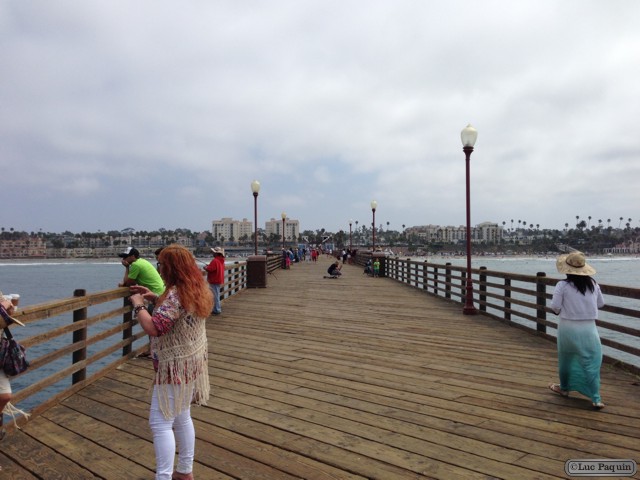
Oceanside Pier, August 12, 2014

Oceanside Pier 5 Mk01

Year: 2014 (August 12, 2014)

11″ x 8.5″

Media: Canon® Pro Platinum High Gloss Photo Paper

Printers: Canon® PIXMA

Color

Art: Photo

Artist: Luc Paquin

Oceanside Pier, North Coast Highway, Oceanside, CA, USA.

Oceanside Pier

History

Oceanside Pier was first built in 1888 at what is now Wisconsin Avenue. The original pier was destroyed by storms in the winter of 1890, and was rebuilt in 1893 by Melchoir Pieper at Pier View Way, where all subsequent piers would be located. Four iterations of the pier were built and then destroyed by heavy storms. The current pier was built and formally opened to the public in September 1987, at a cost of $5 million. At the foot of the pier is the Junior Seau Pier Amphitheatre, which hosts numerous events throughout the year. The Junior Seau Beach Community Center, also known as the Beach Recreation Center, is a 17,000 square foot facility located near the pier that includes a gymnasium, meeting room, stage, and kitchen. Both the amphitheater and the community center were renamed posthumously in 2012 in honor of hometown football hero Junior Seau.

Luc

CSUSM Speech-Language Clinic, San Marcos, August 6, 2014

CSUSM 5 Mk01

Year: 2014 (August 6, 2014)

11″ x 8.5″

Media: Canon® Pro Platinum High Gloss Photo Paper

Printers: Canon® PIXMA

Color

Art: Photo

Artist: Luc Paquin

The CSUSM Speech-Language Clinic

The CSUSM Speech-Language Clinic provides services to individuals with neurological impairments to improve speech/language/cognitive skills. Graduate students provide individualized services under the guidance and supervision of state-licensed and nationally certified speech-language pathologists to approximately 100 individuals annually. Our goal is to provide functional speech-language therapy with a focus on promoting wellness, therefore improving our clients’ overall quality of life. When providing treatment, we keep family, caregiver, and client preferences in mind, and use an evidence-based practice approach.

Luc

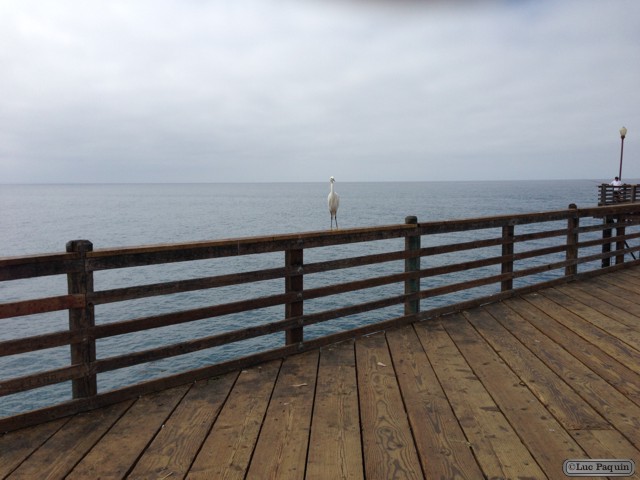
Oceanside Pier, August 12, 2014

Snowy Egret 5 Mk01

Year: 2014 (August 12, 2014)

11″ x 8.5″

Media: Canon® Pro Platinum High Gloss Photo Paper

Printers: Canon® PIXMA

Color

Art: Photo

Artist: Luc Paquin

Oceanside Pier, North Coast Highway, Oceanside, CA, USA.

Oceanside Pier

The Oceanside Pier, located in Oceanside, in northern San Diego County, California, is a wooden pier on the western United States coastline at 1,954 feet (596 m).

Snowy Egret

The snowy egret (Egretta thula) is a small white heron. It is the American counterpart to the very similar Old World little egret, which has established a foothold in the Bahamas. At one time, the beautiful plumes of the snowy egret were in great demand by market hunters as decorations for women’s hats. This reduced the population of the species to dangerously low levels. Now protected in the United States by law, under the Migratory Bird Treaty Act, this bird’s population has rebounded.

Luc

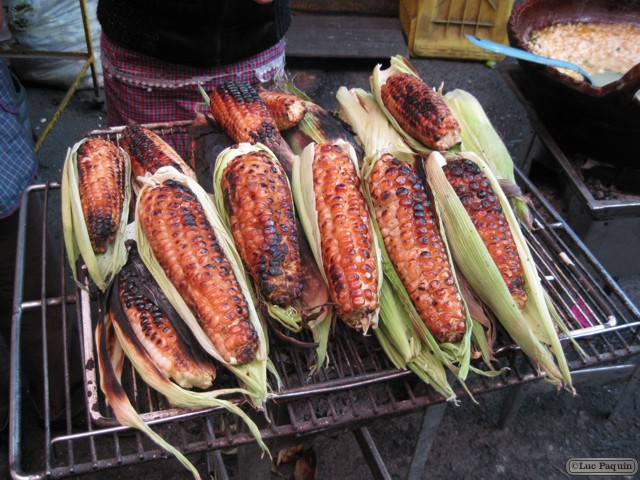
Mercado de Jamaica, Mexico, November 22, 2009

Jamaica 5 Mk03

Year: 2009 (November 22, 2009)

11″ x 8.5″

Media: Canon® Pro Platinum High Gloss Photo Paper

Printers: Canon® PIXMA

Color

Art: Photo

Artist: Luc Paquin

Mercado de Jamaica

There is a section dedicated to piñatas, most made with cardboard and covered in crepe paper, although more traditional ones with a clay pot in the center can still be found. Designs range from traditional stars to those based on recent figures from popular movies and television shows. The busiest time of year for this section of the market is December, before Christmas, when a tradition called “Las Posadas” often involves the breaking of one or more piñatas. While traditional to that season, the breaking of piñatas is no longer confined to December and can be found at various types of celebrations year round, which helps to support this section’s permanent presence.

Maize

Maize, known in some English-speaking countries as corn, is a large grain plant domesticated by indigenous peoples in Mesoamerica in prehistoric times. The leafy stalk produces ears which contain the grain, which are seeds called kernels. Maize kernels are often used in cooking as a starch. The six major types of maize are dent, flint, pod, popcorn, flour, and sweet.

Luc

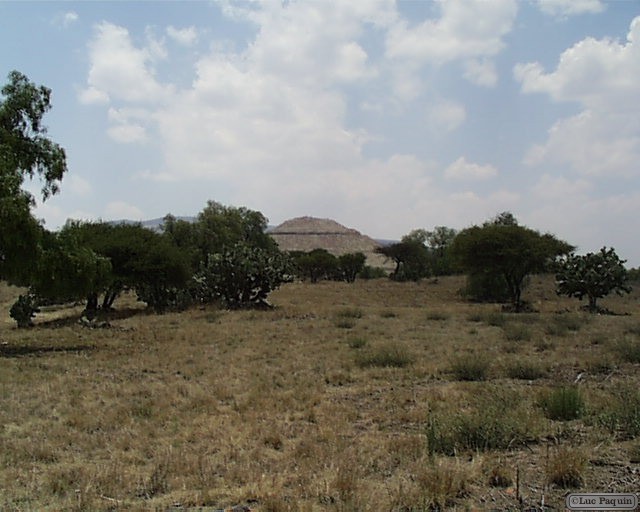
Teotihuacan, Mexico, June 02, 2005

Teotihuacan 5 Mk05

Year: 2005 (June 02, 2005)

11″ x 8.5″

Media: Canon® Pro Platinum High Gloss Photo Paper

Printers: Canon® PIXMA

Color

Art: Photo

Artist: Luc Paquin

Teotihuacan

The original name of the city is unknown, but it appears in hieroglyphic texts from the Maya region as puh, or “Place of Reeds”. This suggests that the Maya of the Classic period understood Teotihuacan as a Place of Reeds similar to other Postclassic Central Mexican settlements that took the name Tollan, such as Tula-Hidalgo and Cholula.

This naming convention led to much confusion in the early 20th century, as scholars debated whether Teotihuacan or Tula-Hidalgo was the Tollan described by 16th-century chronicles. It now seems clear that Tollan may be understood as a generic Nahua term applied to any large settlement. In the Mesoamerican concept of urbanism, Tollan and other language equivalents serve as a metaphor, linking the bundles of reeds and rushes that formed part of the lacustrine environment of the Valley of Mexico and the large gathering of people in a city.

Luc

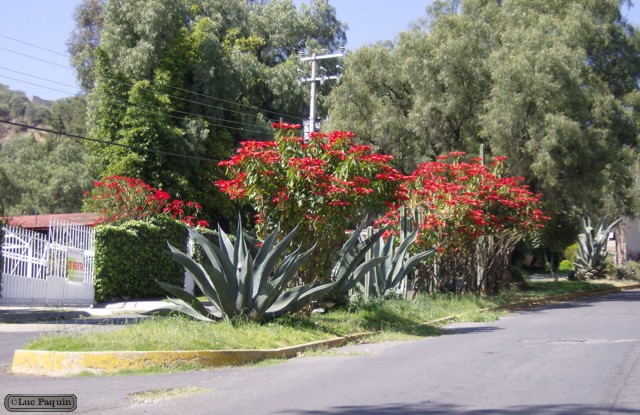
Acozac, Mexico, November 3, 2007

Poinsettia 5 Mk01

Year: 2007 (November 3, 2007)

11″ x 8.5″

Media: Canon® Pro Platinum High Gloss Photo Paper

Printers: Canon® PIXMA

Color

Art: Photo

Artist: Luc Paquin

Citlalin, Acozac, Mexico

Poinsettia

The poinsettia (Euphorbia pulcherrima) is a culturally and commercially important plant species of the diverse spurge family that is indigenous to Mexico and Central America. It is particularly well known for its red and green foliage and is widely used in Christmas floral displays. It derives its common English name from Joel Roberts Poinsett, the first United States Minister to Mexico, who introduced the plant into the United States in 1825.

Luc

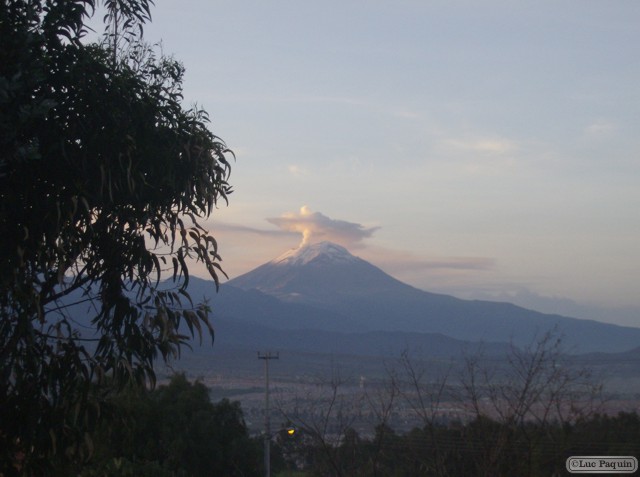
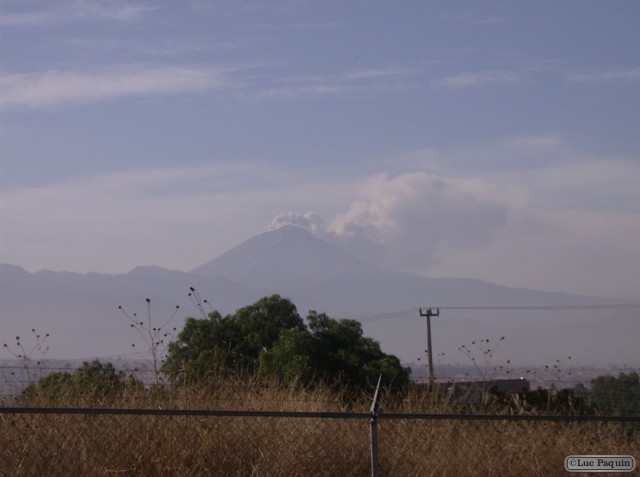
Popocatépetl, Mexico, April 25, 2012

Popocatepetl 5 Mk04

Year: 2012 (April 25, 2012)

11″ x 8.5″

Media: Canon® Pro Platinum High Gloss Photo Paper

Printers: Canon® PIXMA

Color

Art: Photo

Artist: Luc Paquin

Popocatépetl

Geology

The stratovolcano contains a steep-walled, 400 m × 600 m wide crater. The generally symmetrical volcano is modified by the sharp-peaked Ventorrillo on the NW, a remnant of an earlier volcano. At least three previous major cones were destroyed by gravitational failure during the Pleistocene, producing massive debris avalanche deposits covering broad areas south of the volcano. The modern volcano was constructed to the south of the late-Pleistocene to Holocene El Fraile cone. Three major plinian eruptions, the most recent of which took place about 800 AD, have occurred from Popocatépetl since the mid Holocene, accompanied by pyroclastic flows and voluminous lahars that swept basins below the volcano.

International Space Station view of Popocatépetl sending plume of volcanic ash south January 23, 2001, Iztaccíhuatl at right Popocatépetl viewed from Puebla, Puebla, January 2004 eruption.

According to paleomagnetic studies, the volcano is about 730,000 years old. The elevation at the peak is 5,450 m. The volcano is cone shaped with a diameter of 25 km at its base. The crater is elliptical with an orientation northeast-southwest. The walls of the crater vary from 600 to 840 m in height. Popocatépetl is currently active after being dormant for about half of last century. In 1991 the volcano’s activity increased and since 1993 smoke can be seen constantly emanating from the crater.

Luc

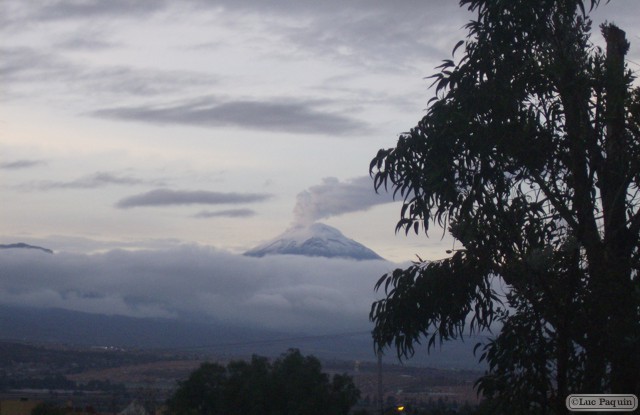
Popocatépetl, Mexico, June 30, 2009

Popocatepetl 5 Mk03

Year: 2009 (June 30, 2009)

11″ x 8.5″

Media: Canon® Pro Platinum High Gloss Photo Paper

Printers: Canon® PIXMA

Color

Art: Photo

Artist: Luc Paquin

Popocatépetl

Toponymy

The name Popocatépetl comes from the Nahuatl words popoca ‘it smokes’ and tepetl ‘mountain’, meaning Smoking Mountain. The volcano is also referred to by Mexicans as El Popo. The alternate nickname Don Goyo comes from the mountain’s association in the lore of the region with San Gregorio (St. Gregory), “Goyo” being a nickname-like short form of Gregorio.

Luc

Popocatépetl, Mexico, June 10, 2008

Popocatepetl 5 Mk02

Year: 2008 ( June 10, 2008)

11″ x 8.5″

Media: Canon® Pro Platinum High Gloss Photo Paper

Printers: Canon® PIXMA

Color

Art: Photo

Artist: Luc Paquin

Popocatépetl

Magma erupting from Popocatépetl has historically been predominantly andesitic, but it has also erupted large volumes of dacite. Magma produced in the current cycle of activity tends to be a mixture of the two.

Luc