Old Mission San Luis Rey, Oceanside, October 26, 2014

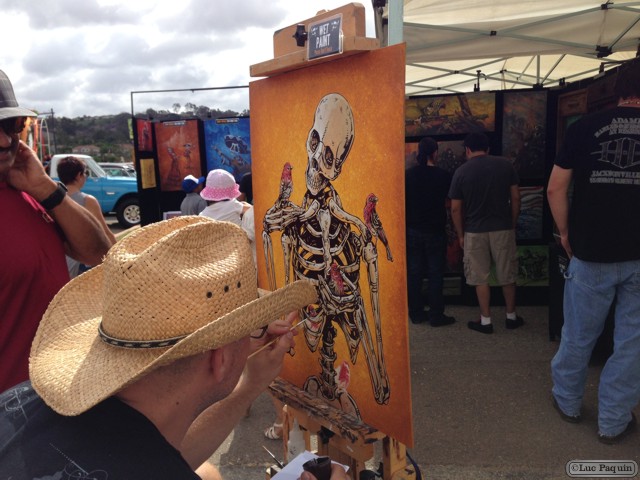
Old Mission San Luis Rey 5 Mk02

Year: 2014 (October 26, 2014)

11″ x 8.5″

Media: Canon® Pro Platinum High Gloss Photo Paper

Printers: Canon® PIXMA

Color

Art: Photo

Artist: Luc Paquin

Dia de los Muertos – Day of the Dead

Old Mission San Luis Rey

Old Mission San Luis Rey’s museum’s collection includes artifacts from Native American, Spanish, Mission, Mexican Secularization and American Military periods. A tour of the Museum begins in the Founder’s Room with exhibits of the Luiseno Indian culture and traces the arrival of the Spanish Franciscan Missionaries in the early stages of the mission settlement.

Luc

Old Mission San Luis Rey, Oceanside, October 26, 2014

Old Mission San Luis Rey 5 Mk01

Year: 2014 (October 26, 2014)

11″ x 8.5″

Media: Canon® Pro Platinum High Gloss Photo Paper

Printers: Canon® PIXMA

Color

Art: Photo

Artist: Luc Paquin

Dia de los Muertos – Day of the Dead

Old Mission San Luis Rey

Founded in 1798 by Padre Fermin Francisco de Lasuen, the Mission was named after St. Louis IX, King of France, who lived during the 13th century. The history of the San Luis Rey area reflects five periods of occupation: Luiseno Indian, Spanish Mission, Mexican Secularization, American Military, and Twentieth Century Restoration. Because of its large size the mission has been nicknamed “King of the Missions.”

Luc

Oceanside, California, January 10, 2015

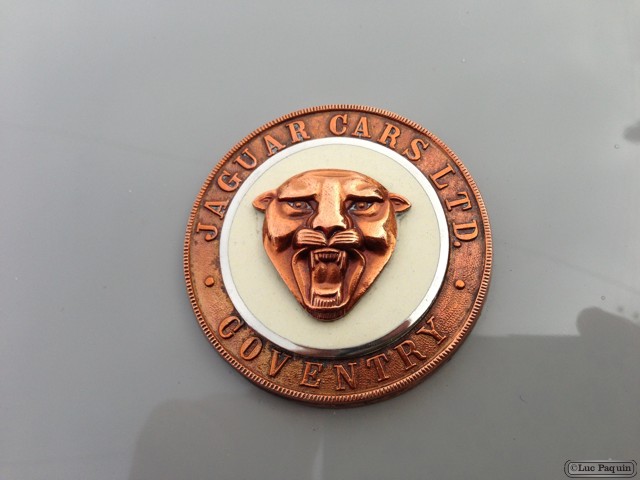
Jaguar XK120 5 Mk02

Year: 2015 (January 10, 2015)

11″ x 8.5″

Media: Canon® Pro Platinum High Gloss Photo Paper

Printers: Canon® PIXMA

Color

Art: Photo

Artist: Luc Paquin

Danny’s Donuts, Vista, CA

California Car Shows

United States legal definition

Legally, most states have time-based rules for the definition of “classic” for purposes such as antique vehicle registration; for example, Most states define it as “A motor vehicle, but not a reproduction thereof, manufactured at least 20 years prior to the current year which has been maintained in or restored to a condition which is substantially in conformity with manufacturer specifications and appearance.”

Despite this, at many American classic car shows, automobiles typically range from the thirties to sixties. Examples of cars at such shows include the Chevrolet Bel-Air, Ford T-Bucket, Dodge Charger, Chevrolet Deuce Coupe, and 1949 Ford. Meanwhile, the Concours D’Elegance car shows feature prestigious automobiles such as the Cadillac V16 or pre-1940 Rolls-Royce models. “Classic” cars at these shows seldom go beyond 1972. Any cars from 1973 onward are defined as “modern customs”, “exotics”, or “collectibles”. For interest, cars such as the AMC Gremlin or Ford Pinto may be exhibited.

Americans are divided on the exact era in which a “classic car” can be identified. Many Americans divide automobiles by separate eras: horseless carriages (19th century experimental automobiles such as the Daimler Motor Carriage), antique cars (brass era cars such as the Ford Model T), and classic cars (typically 1930s cars such as the Cord 812 through the end of the muscle car period in the 1970s – a majority use the 1972 model year as the cutoff). The late seventies are disputed as being “classics”, as the oil crisis of 1973 brought several now-infamous cars such as the Ford Pinto and AMC Gremlin. The 1980s are often viewed as the early modern period due to the rise of Japanese automakers such as Toyota and Nissan.

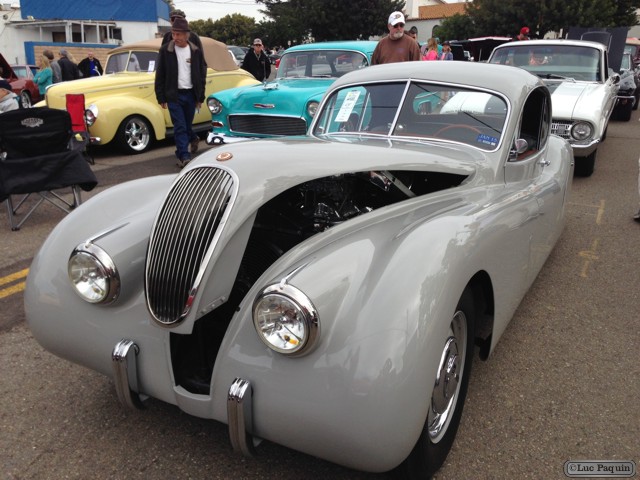
Jaguar XK120

The XK120 was launched in open two-seater or (US) roadster form at the 1948 London Motor Show as a testbed and show car for the new Jaguar XK engine. The display car was the first prototype, chassis number 670001. It looked almost identical to the production cars except that the straight outer pillars of its windscreen would be curved on the production version. The roadster caused a sensation, which persuaded Jaguar founder and design boss William Lyons to put it into production.

Beginning in 1948, the first 242 cars wore wood-framed open 2-seater bodies with aluminium panels. Production switched to the 1cwt or 51 kg heavier all-steel in early 1950. The “120” in the name referred to the aluminium car’s 193 km/h top speed (faster with the windscreen removed), which made it the world’s fastest production car at the time of its launch. In 1949 the first production roadster, chassis number 670003, was delivered to Clark Gable.

Luc

Oceanside, California, January 10, 2015

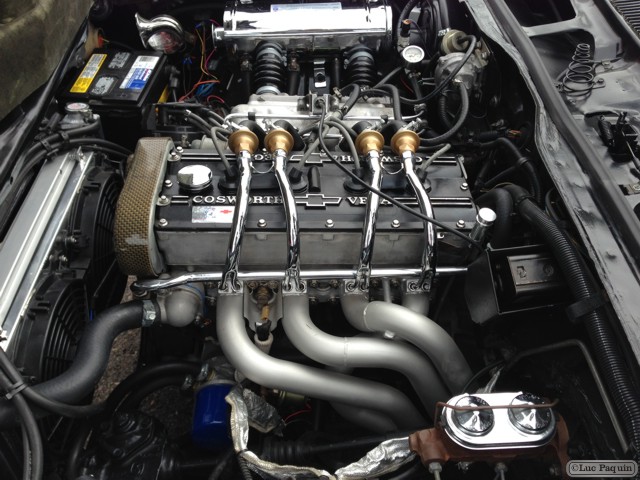
Cosworth Vega 5 Mk01

Year: 2015 (January 10, 2015)

11″ x 8.5″

Media: Canon® Pro Platinum High Gloss Photo Paper

Printers: Canon® PIXMA

Color

Art: Photo

Artist: Luc Paquin

Danny’s Donuts, Vista, CA

California Car Shows

A classic car is an older automobile; the exact definition varies around the world. The Classic Car Club of America maintains that a car must be between 30 and 49 years old to be a classic, while cars between 50 and 99 fall into a pre-antique class, and cars 100 years and older fall into the Antique Class. In the UK, ‘classic cars’ range from veteran (pre-First World War), to vintage (1919-1930), to post-vintage (1930s). Post-Second World War classic cars are not so precisely defined.

Chevrolet Cosworth Vega

The Chevrolet Cosworth Vega is a subcompact four-passenger automobile produced by the Chevrolet division of General Motors for the 1975 and 1976 model years. It is a limited-production version of the Vega, with higher performance.

Chevrolet developed the car’s all-aluminum inline-four 122 cu in (1,999 cc) engine, and British company Cosworth Engineering designed the DOHC cylinder head. 5,000 engines were built.

3,508 cars were made. They were priced $900 below the 1975 Chevrolet Corvette.

Racing origin

Known at Cosworth Engineering as Project EA, a Cosworth racing engine based on the Vega aluminum block produced a reported 260 hp (190 kW) and powered Chevron and Lola race cars to wins in the 2-liter class in their first outings. The ZO9 Cosworth Vega engine is a de-tuned version. Bore, stroke and valve sizes are identical but it lacks the EA engine’s dry sump lubricating system (unnecessary in a street use car), has a lower compression ratio and different valve timing, and uses Bendix electronic fuel injection instead of Lucas mechanical injection to cope with a wider range of operating conditions as well as emission controls.

Luc

Oceanside, California, January 10, 2015

Jaguar XK120 5 Mk01

Year: 2015 (January 10, 2015)

11″ x 8.5″

Media: Canon® Pro Platinum High Gloss Photo Paper

Printers: Canon® PIXMA

Color

Art: Photo

Artist: Luc Paquin

Danny’s Donuts, Vista, CA

California Car Shows

Classic Car Club of America

The Classic Car Club of America defines a CCCA Classic as follows:

A CCCA Classic is a “fine” or “distinctive” automobile, either American or foreign built, produced between 1925 and 1948. Other factors, including engine displacement, custom coachwork and luxury accessories, such as power brakes, power clutch, and “one-shot” or automatic lubrication systems, help determine whether a car is considered a Classic.

Any member may petition for a vehicle to join the list. Such applications are carefully scrutinized and rarely are a new vehicle type admitted.

This rather exclusive definition of a classic car is not universally followed, however, and this is acknowledged by the CCCA: while it still maintains the true definition of “classic car” it is, it generally uses terms such as CCCA Classic or the trademarked Full Classic to avoid confusion.

Jaguar XK120

The Jaguar XK120 is a sports car which was manufactured by Jaguar between 1948 and 1954. It was Jaguar’s first sports car since the SS 100, which ceased production in 1940.

Luc

Zoológico de Chapultepec, October 30, 2003

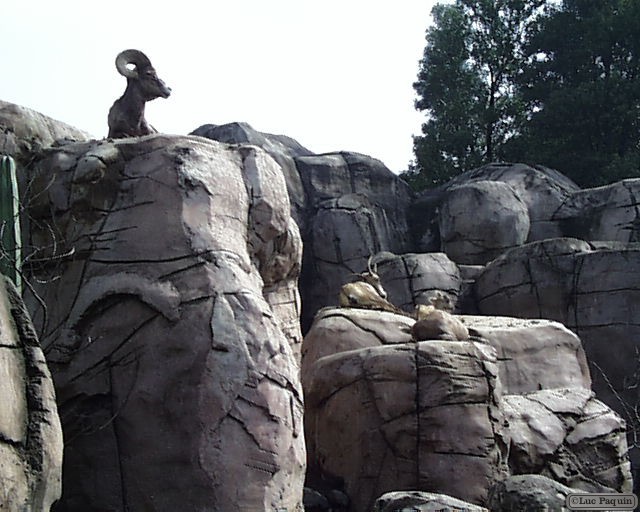
Bighorn Sheep 5 Mk01

Year: 2003 (October 30, 2003)

11″ x 8.5″

Media: Canon® Pro Platinum High Gloss Photo Paper

Printers: Canon® PIXMA

Color

Art: Photo

Artist: Luc Paquin

Zoológico de Chapultepec

Between 1950 and 1960, the zoo had the sole purpose of being a place of recreation that exhibited several popular animal species. Ernesto P. Uruchurtu, mayor of the city during that decade, gave new impetus to the zoo, new species were acquired and the entire collection was renovated. Some of the animals that were acquired back then are still in the collection more than half a century later.

Bighorn Sheep

The bighorn sheep (Ovis canadensis) is a species of sheep in North America named for its large horns. These horns weighed up to 14 kg, while the sheep themselves weighed up to 140 kg. Recent genetic testing indicates three distinct subspecies of Ovis canadensis, one of which is endangered: O. c. sierrae. Sheep originally crossed to North America over the Bering land bridge from Siberia: the population in North America peaked in the millions, and the bighorn sheep entered into the mythology of Native Americans. By 1900, the population had crashed to several thousand, due to diseases introduced through European livestock and overhunting. Conservation efforts (in part by the Boy Scouts) have restored the population.

Luc

Teotihuacan, Mexico, June 02, 2005

Teotihuacan Mk04

Year: 2005 (June 02, 2005)

11″ x 8.5″

Media: Canon® Pro Platinum High Gloss Photo Paper

Printers: Canon® PIXMA

Color

Art: Photo

Artist: Luc Paquin

Teotihuacan

The city and the archaeological site are located in what is now the San Juan Teotihuacán municipality in the State of México, approximately 40 kilometres northeast of Mexico City. The site covers a total surface area of 83 square kilometres and was designated a UNESCO World Heritage Site in 1987. It is the most visited archaeological site in Mexico.

Luc

Lac des Trois Montagnes, 2002

Lac Des Trois Montagnes 5 Mk03

Year: 2002

11″ x 8.5″

Media: Canon® Pro Platinum High Gloss Photo Paper

Printers: Canon® PIXMA

Color

Art: Photo

Artist: Luc Paquin

Year: 2006 (November 21, 2006)

11″ x 8.5″

Media: Canon® Pro Platinum High Gloss Photo Paper

Printers: Canon® PIXMA

Color

Art: Photo

Artist: Luc Paquin

Luc

Lac des Trois Montagnes, March 11, 1997

Lac Des Trois Montagnes 5 Mk02

Year: 1997 (March 11, 1997)

11″ x 8.5″

Media: Canon® Pro Platinum High Gloss Photo Paper

Printers: Canon® PIXMA

Color

Art: Photo

Artist: Luc Paquin

Lac des Trois Montagnes

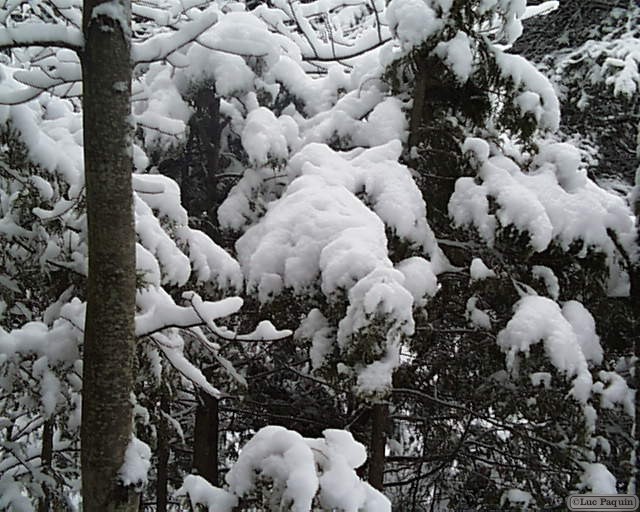
Lac des Trois Montagnes, La Conception, QC, Canada. Snowfall.

Snowfall

The process of precipitating snow is called snowfall. Snowfall tends to form within regions of upward movement of air around a type of low-pressure system known as an extratropical cyclone. Snow can fall poleward of these systems’ associated warm fronts and within their comma head precipitation patterns (called such due to the comma-like shape of the cloud and precipitation pattern around the poleward and west sides of extratropical cyclones). Where relatively warm water bodies are present, for example because of water evaporation from lakes, lake-effect snowfall becomes a concern downwind of the warm lakes within the cold cyclonic flow around the backside of extratropical cyclones. Lake-effect snowfall can be heavy locally.

Luc

Popocatépetl, Mexico, November 21, 2006

Popocatepetl 5 Mk01

Year: 2006 (November 21, 2006)

11″ x 8.5″

Media: Canon® Pro Platinum High Gloss Photo Paper

Printers: Canon® PIXMA

Color

Art: Photo

Artist: Luc Paquin

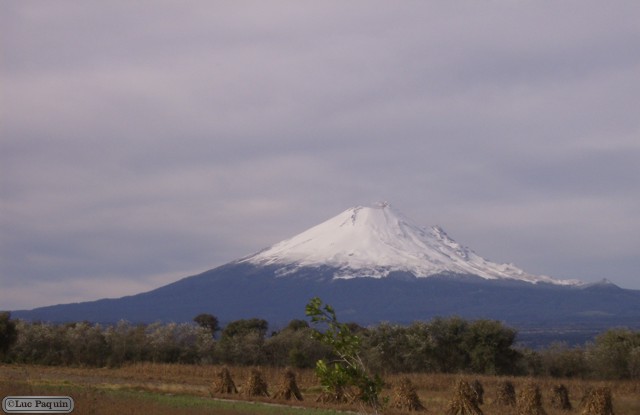
Popocatépetl

Popocatépetl is an active volcano, located in the states of Puebla, Mexico, and Morelos, in Central Mexico, and lies in the eastern half of the Trans-Mexican volcanic belt. At 5,426 m it is the second highest peak in Mexico, after the Pico de Orizaba at 5,636 m.

It is linked to the Iztaccihuatl volcano to the north by the high saddle known as the Paso de Cortés.

Popocatépetl is 70 km southeast of Mexico City, from where it can be seen regularly, depending on atmospheric conditions. Until recently, the volcano was one of three tall peaks in Mexico to contain glaciers, the others being Iztaccihuatl and Pico de Orizaba. In the 1990s, the glaciers such as Glaciar Norte (North Glacier) greatly decreased in size, partly due to warmer temperatures but largely due to increased volcanic activity. By early 2001, Popocatépetl’s glaciers were gone; ice remained on the volcano, but no longer displayed the characteristic features of glaciers such as crevasses.

Luc