Poppy, Oceanside, February 17, 2015

Poppy 6 Mk01

Year: 2015 (February 17, 2015)

11″ x 8.5″

Media: Canon® Pro Platinum High Gloss Photo Paper

Printers: Canon® PIXMA

Color

Art: Photo

Artist: Luc Paquin

The Home Depot, Oceanside, CA, USA

Poppy

A poppy is a flowering plant in the subfamily Papaveroideae of the family Papaveraceae. Poppies are herbaceous plants, often grown for their colorful flowers. One species of poppy, Papaver somniferum, produces edible seeds, and is also the source of the crude drug opium which contains powerful medicinal alkaloids such as morphine and has been used since ancient times as an analgesic and narcotic medicinal and recreational drugs. Following the trench warfare which took place in the poppy fields of Flanders, during the 1st World War, poppies have become a symbol of remembrance of soldiers who have died during wartime.

Luc

Tulips Crispa Hamilton, Oceanside, February 17, 2015

Fringed Tulips Mk01

Year: 2015 (February 17, 2015)

11″ x 8.5″

Media: Canon® Pro Platinum High Gloss Photo Paper

Printers: Canon® PIXMA

Color

Art: Photo

Artist: Luc Paquin

The Home Depot, Oceanside, CA, USA

Fringed Tulips

The tulip is a Eurasian and North African genus of perennial, bulbous plants in the lily family. It is an herbaceous herb with showy flowers, of which around 75 wild species are currently accepted.

The genus’s native range extends west to the Iberian Peninsula, through North Africa to Greece, the Balkans, Turkey, throughout the Levant (Syria, Israel, Palestinian Territories, Lebanon, Jordan) and Iran, north to Ukraine, southern Siberia and Mongolia, and east to the Northwest of China. The tulip’s centre of diversity is in the Pamir, Hindu Kush, and Tien Shan mountains. It is a common element of steppe and winter-rain Mediterranean vegetation.

A number of species and many hybrid cultivars are grown in gardens or as potted plants.

These tulips have petals which are topped with fringes that look like the frayed edge of a piece of satin fabric. Some garden centres may carry only two or three varieties of Fringed Tulips, but they are gradually becoming more popular, not only because the flowers look so elegant, but also because the blooms are quite long-lasting.

Luc

Lac des Trois Montagnes, Quebec, January 9, 2001

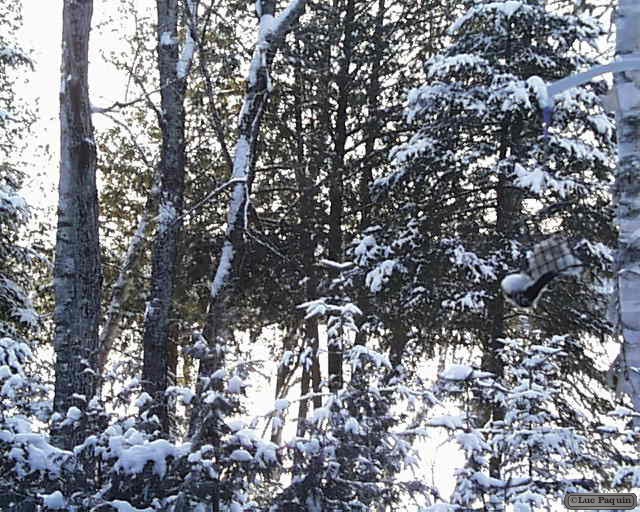
Hairy Woodpecker 6 Mk02

Year: 2001 (January 9, 2001)

11″ x 8.5″

Media: Canon® Pro Platinum High Gloss Photo Paper

Printers: Canon® PIXMA

Color

Art: Photo

Artist: Luc Paquin

Lac des Trois Montagnes, La Conception, QC, Canada

The lake front vacation homes around Lac des Trois Montagnes make the perfect base camp to explore the Parc du Mont Tremblant. The national park is the largest and oldest in Quebec. In 1894 a doctor announced plans for a sanatorium on Mont Tremblant. The sanatorium was never built, but the land had already become a government protected reserve laying the ground work for the national park. Parc du Mont Tremblant encompasses 373,129 acres and includes 400 lakes and six rivers. Perhaps its most striking feature, however, is 3,176 foot high Mont Tremblant. Known to the Iroquois and Algonquin as “Manitou Ewi Chi Saga,” meaning “Manitou’s Formidable Mountain,” the mountain was considered sacred.

Hairy Woodpecker

Identification

Plumage pattern is nearly identical to the downy’s, with long white patch down the back, variable white spotting on the wing coverts and flight feathers, and mostly unmarked underparts. The outer tail feathers are usually unmarked white. Adult: male shows red nuchal bar, often divided vertically by black (especially in some eastern populations); red is lacking in female.

Luc

Lac des Trois Montagnes, Quebec, January 9, 2001

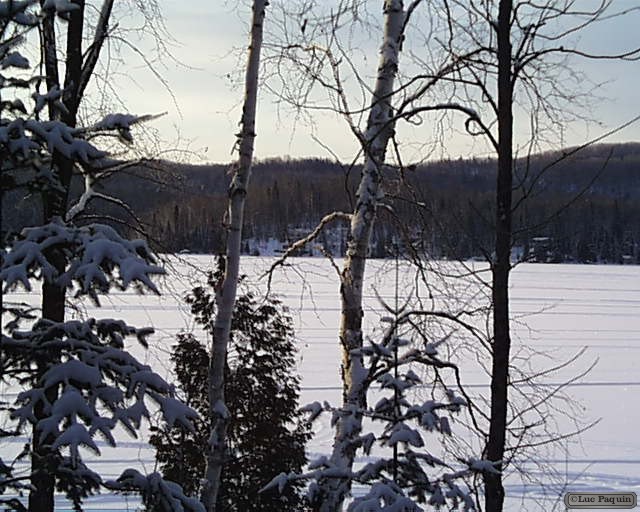
Trois Montagnes 6 Mk03

Year: 2001 (January 9, 2001)

11″ x 8.5″

Media: Canon® Pro Platinum High Gloss Photo Paper

Printers: Canon® PIXMA

Color

Art: Photo

Artist: Luc Paquin

Lac des Trois Montagnes, La Conception, QC, Canada

Lac des Trois Montagnes is one of hundreds of lakes in the Laurentides and Lanaudiere regions of Quebec, Canada. There are so many, one more might seem unremarkable, but there is nothing common about the area around Mount Tremblant. Lac des Trois Montagnes is the second largest lake in the area and has a maximum depth of 222 feet. The water is clean and clear and full of trout, and there is plenty of room to swim, boat, water ski, and kayak. Although the shoreline still feels natural and wooded, there are plenty of vacation rentals and real estate for sale including waterfront lots.

Luc

Lac des Trois Montagnes, Quebec, January 9, 2001

Hairy Woodpecker 6 Mk01

Year: 2001 (January 9, 2001)

11″ x 8.5″

Media: Canon® Pro Platinum High Gloss Photo Paper

Printers: Canon® PIXMA

Color

Art: Photo

Artist: Luc Paquin

Lac des Trois Montagnes, La Conception, QC, Canada

She clips the carabineer onto the metal ring drilled into the rock. Reaching out with her foot she teeters between metal steps walking the “iron road.” It would be less scary not to look down, but the view is one of the things that made her hang herself off the side of this cliff. She checks her protection one more time, then leans out and looks down. Below her, is one of the most beautiful views in the Laurentides Region of Quebec. Literally hundreds of lakes dot the landscape. She imagines she can pick out Lac des Trois Montagnes, and tonight when she is sipping wine on the deck of her lakeside vacation home she will look back at the mountain and remember this moment. The day, she’ll remember the rest of her life.

Hairy Woodpecker

Like a large, long-billed version of the downy woodpecker, the hairy is a widespread generalist of a variety of forests and woodlands over most of the continent. Polytypic. Length 9″ (24 cm).

Luc

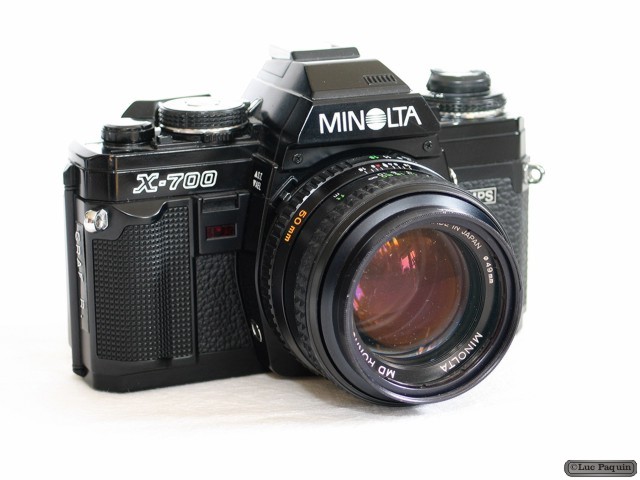
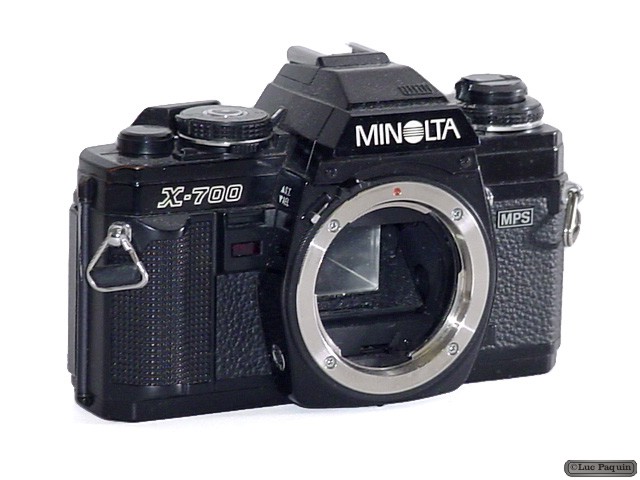
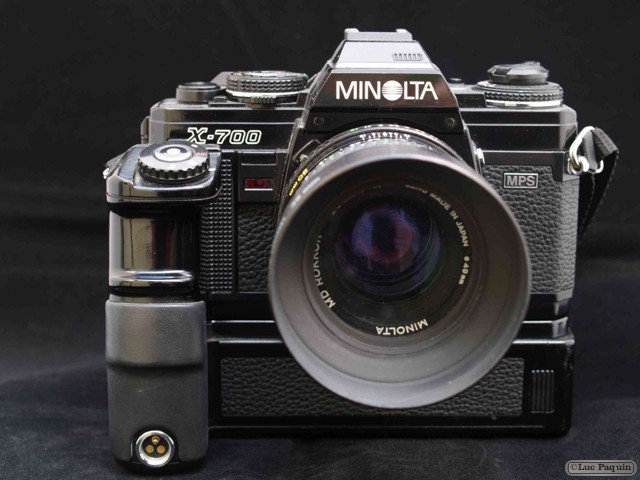
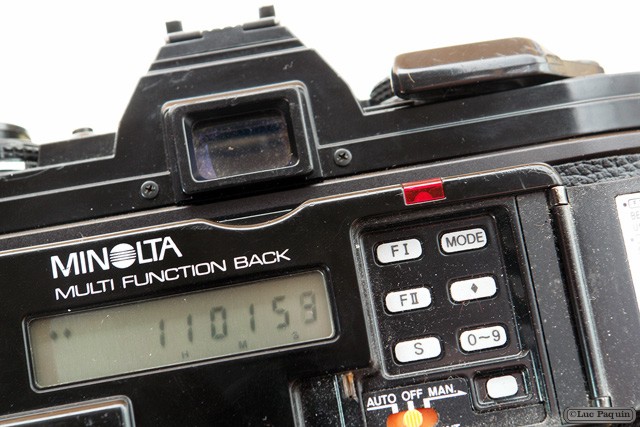
Camera – Minolta X-700

Minolta X-700 Mk01

Minolta X-700 Mk02

Minolta X-700 Mk03

Minolta X-700 Mk04

Minolta X-700 Mk05

The Minolta X-700 is a 35 mm single-lens reflex film camera introduced by Minolta in 1981. It was the top model of their final manual-focus SLR series before the introduction of the auto-focus Minolta Maxxum 7000. It used the basic body of the XG-M with electronically controlled stepless speeds, but added full program autoexposure in addition to the XG-M’s aperture priority and metered manual modes. It also introduced through-the-lens (TTL) flash metering, and added exposure lock and interchangeable focusing screens to the XG-M’s features. Based on the X-700 chassis, Minolta later launched the cheaper models X-300 and X-500. The X-500 lacked the X-700’s program exposure mode, but featured a fill-in flash mode. The X-300 was the basic model of the late X-series. It lacked TTL flash metering and program exposure mode, it did not show the f-stop-setting of the lens in the viewfinder and it did not have a depth-of-field control button. Basic parts of all three cameras, i.e. shutter, viewfinder, mirror system, and light metering system were identical.

Motivated by the huge success of the low-priced Canon AE-1 and other, consumer-level cameras, Minolta followed suit in the new camera’s design by offering more external camera features. This had the effect of lowering the budget for the camera’s internal mechanism. In a step backwards, the new X-700 was not equipped with the fast vertical metal shutter of previous XE and XD cameras, and was instead fitted with a less expensive horizontal traverse silk shutter, enabling maximum sync speed of 1/60 second, and operated by an electromagnetic shutter release. No mechanical shutter speed was provided, even in bulb mode. The resultant battery drain and inability to meter at light levels below EV-1 makes the camera a poor choice for long exposures or astrophotography. Minolta further lowered the price of the camera by fabricating certain parts in the film advance and rewind mechanism of less expensive materials, and by the use of less expensive electronic components. Even the rewind lever of the camera is made of plastic.

The X-700 was awarded the European “Camera of the Year” award in 1981, and its competitive pricing resulted in its becoming the most successful Minolta camera since the SRT line. As Minolta began to introduce its auto-focus cameras and lenses, further research and development of manual-focus 35mm SLR cameras was shelved. Some internal components of the X-700 were changed over its production run, apparently in an effort to further reduce costs. Minolta was also one of the first major 35mm SLR manufacturer to outsource assembly of its cameras to countries outside Japan. The camera was discontinued in 1999.

Luc

Mont-Tremblant, Quebec, January 9, 2001

Mont-Tremblant 6 Mk19

Year: 2001 (January 9, 2001)

11″ x 8.5″

Media: Canon® Pro Platinum High Gloss Photo Paper

Printers: Canon® PIXMA

Color

Art: Photo

Artist: Luc Paquin

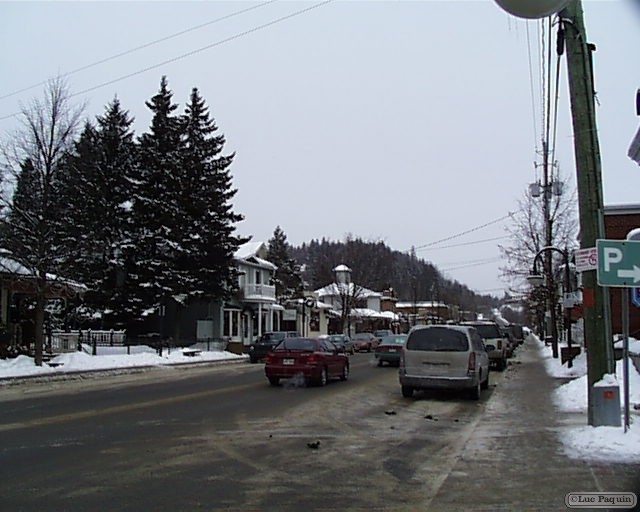
Mont-Tremblant, Quebec, Canada

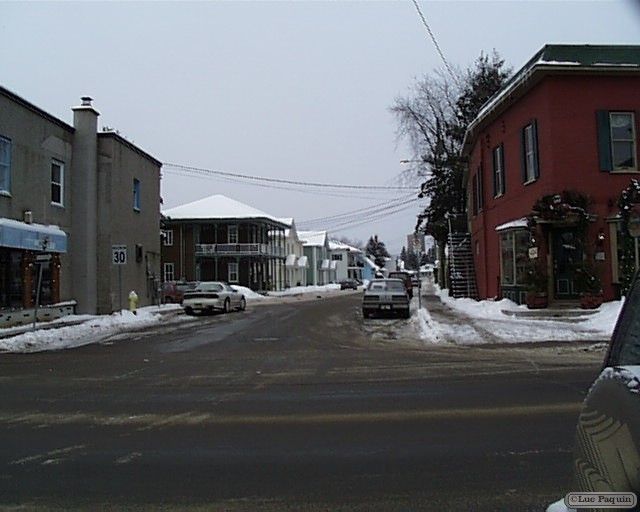
Village

In the United States, the meaning of “village” varies by geographic area and legal jurisdiction. In many areas, “village” is a term, sometimes informal, for a type of administrative division at the local government level. Since the Tenth Amendment to the United States Constitution prohibits the federal government from legislating on local government, the states are free to have political subdivisions called “villages,” or not to do so, and to define the word in many different ways. Typically, a village is a type of municipality, although it can also be a special district or an unincorporated area. It may or may not be recognized for governmental purposes.

Luc

Mont-Tremblant, Quebec, January 9, 2001

Mont-Tremblant 6 Mk18

Year: 2001 (January 9, 2001)

11″ x 8.5″

Media: Canon® Pro Platinum High Gloss Photo Paper

Printers: Canon® PIXMA

Color

Art: Photo

Artist: Luc Paquin

Mont-Tremblant, Quebec, Canada

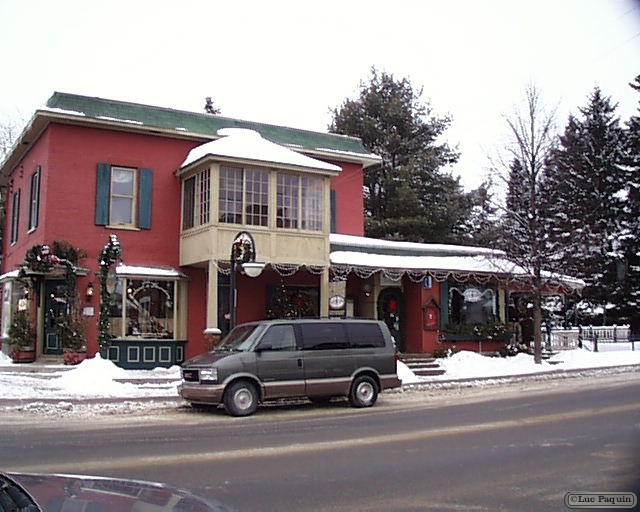
Village

Although many patterns of village life have existed, the typical village was small, consisting of perhaps 5 to 30 families. Homes were situated together for sociability and defence, and land surrounding the living quarters was farmed. Traditional fishing villages were based on artisan fishing and located adjacent to fishing grounds.

Luc

Mont-Tremblant, Quebec, January 9, 2001

Mont-Tremblant 6 Mk17

Year: 2001 (January 9, 2001)

11″ x 8.5″

Media: Canon® Pro Platinum High Gloss Photo Paper

Printers: Canon® PIXMA

Color

Art: Photo

Artist: Luc Paquin

Mont-Tremblant, Quebec, Canada

Village

In the past, villages were a usual form of community for societies that practise subsistence agriculture, and also for some non-agricultural societies. In Great Britain, a hamlet earned the right to be called a village when it built a church.[1] In many cultures, towns and cities were few, with only a small proportion of the population living in them. The Industrial Revolution attracted people in larger numbers to work in mills and factories; the concentration of people caused many villages to grow into towns and cities. This also enabled specialization of labor and crafts, and development of many trades. The trend of urbanization continues, though not always in connection with industrialization. Villages have been eclipsed in importance as units of human society and settlement.

Luc

Mont-Tremblant, Quebec, January 9, 2001

Mont-Tremblant 6 Mk16

Year: 2001 (January 9, 2001)

11″ x 8.5″

Media: Canon® Pro Platinum High Gloss Photo Paper

Printers: Canon® PIXMA

Color

Art: Photo

Artist: Luc Paquin

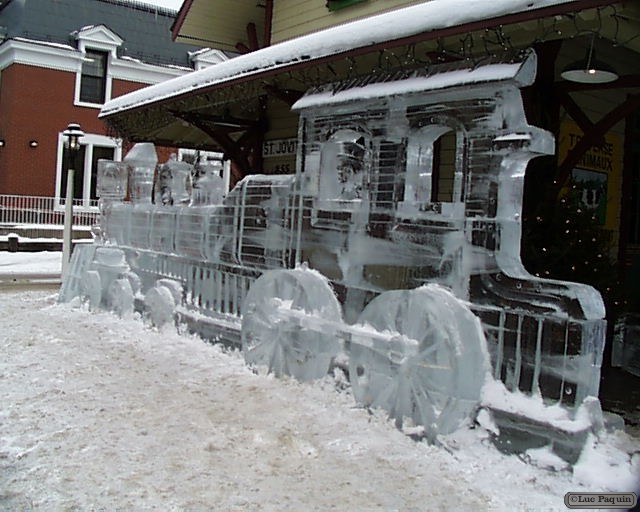
Mont-Tremblant, Quebec, Canada

Ice Sculpture

Raw Material

Sculpting ice presents a number of difficulties due to the variability and volatility of the material. Ice may be sculpted in a wide range of temperatures and the characteristics of the ice will change according to its temperature as well as the surrounding temperatures. Sculptures are generally carved from blocks of ice and these blocks must be carefully selected to be suitable for the sculptor’s purposes and should be free of undesired impurities. Typically, ideal carving ice is made from pure, clean water. However, clear, transparent ice is a result of the freezing process and not necessarily related to the purity of the water. Clouded ice is often the result finely trapped air molecules that tend to bind to the impurities while naturally freezing. Mechanically clear ice is usually made as the result of controlling the freezing process by the circulation of the water in the freezing chamber. This process hopes to eliminate any trapped air from binding to the impurities in the freezing process. Certain machines and processes allow for slow freezing and the removal of impurities and therefore are able to produce the clear blocks of ice that are favored by ice carvers. However, not all blocks that are carved are clear ice. White ice blocks look like snow and are sometimes carved. Colored ice blocks are produced by adding dyes to the ice and can be carved as well. In some instances, clear ice and colored ice are combined to create a desired effect.

There are various sizes of ice blocks that are produced artificially. Naturally made blocks can be cut to almost any size from frozen rivers or from “ice quarries,” which are essentially lakes or ponds that have frozen over. Large ice blocks must be moved by heavy machinery and are used for large ice sculpting events or as part of an ice hotel.

Luc