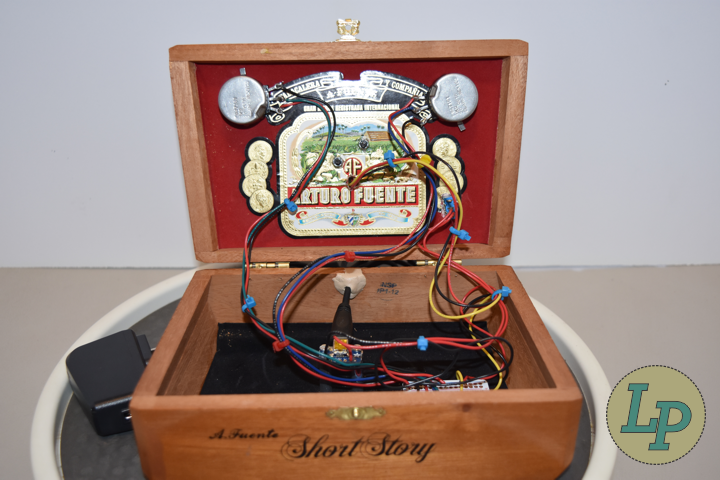
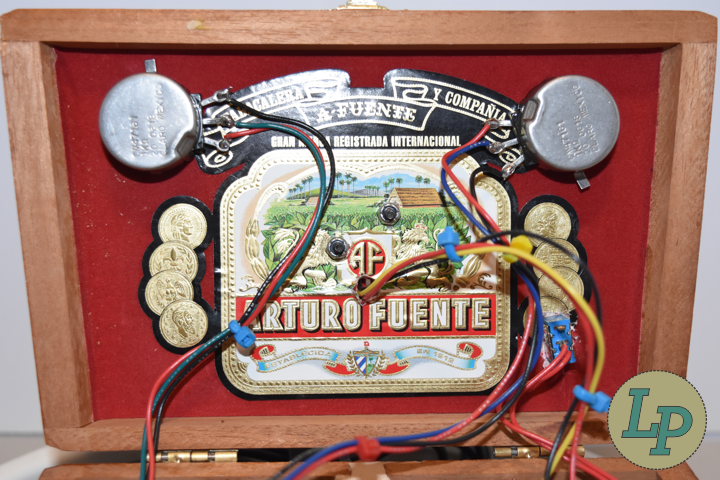
Length: 7.5 inches – 190 mm Width: 4.75 inches – 120 mm Height: 6.5 inches – 165 mm
Media: Cigar Box, Arduino Pro Mini 328, 8 NeoPixel Stick, Toggle Switch, Rotary Potentiometer Brightening, Rotary Potentiometer Sensor, USB Cable, USB Port Power Supply, Ball Jar, Etc…
Software: Arduino IDE, Corel PHOTO-PAINT, CorelDRAW, Convert Text to Speech
Media: Canon Pro Platinum Matte Photo Paper, B & W
Video: Pinnacle Studio 20
Price: $50.00 and Shipping
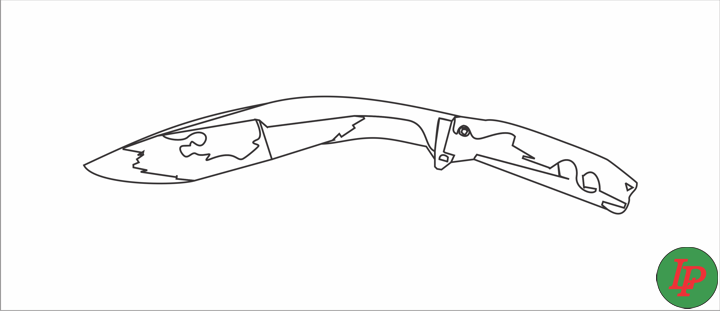
The kukri or khukuri is a Nepalese knife with an inwardly curved blade, similar to a machete, used as both a tool and as a weapon in Nepal. Traditionally, it was, and in many cases still is, the basic utility knife of the Nepalese people. It is a characteristic weapon of the Nepalese Army, the Royal Gurkha Rifles of the British Army, the Assam Rifles, the Assam Regiment, the Garhwal Rifles, the Gorkha regiments of the Indian Army, and of all Gurkha regiment throughout the world, so much so that some English-speakers refer to the weapon as a “Gurkha blade” or “Gurkha knife”. The kukri often appears in Nepalese heraldry and is used in many traditional rituals such as wedding ceremonies.
The kukri, khukri, and kukkri spellings are of Indian origin, the original Nepali form being khukuri.
El kukri o khukuri es un cuchillo nepalés con una hoja curvada hacia adentro, similar a un machete, que se utiliza como herramienta y como arma en Nepal. Tradicionalmente, era, y en muchos casos todavía lo es, el cuchillo de utilidad básico del pueblo nepalés. Es un arma característica del Ejército de Nepal, los Rifles Gurkha Reales del Ejército Británico, los Rifles Assam, el Regimiento Assam, los Rifles Garhwal, los regimientos Gorkha del Ejército Indio, y de todo el regimiento Gurkha en todo el mundo, tanto por lo que algunos angloparlantes se refieren al arma como una “espada Gurkha” o un “cuchillo Gurkha”. El kukri a menudo aparece en la heráldica nepalí y se usa en muchos rituales tradicionales, como las ceremonias de boda.
Los deletreos kukri, khukri y kukkri son de origen indio, la forma original nepalí es khukuri.
Le kukri ou khukuri est un couteau népalais doté d’une lame incurvée vers l’intérieur, semblable à une machette, utilisé à la fois comme outil et comme arme au Népal. Traditionnellement, il était, et dans de nombreux cas, toujours le couteau utilitaire de base du peuple népalais. C’est une arme caractéristique de l’armée népalaise, des Royal Gurkha Rifles de l’Armée britannique, des Assam Rifles, du Régiment Assam, des Garhwal Rifles, des régiments Gorkha de l’armée indienne et de tous les régiments Gurkha du monde entier. de sorte que certains anglophones se réfèrent à l’arme comme étant une “lame de Gurkha” ou un “couteau Gurkha”. Le kukri apparaît souvent dans l’héraldique népalaise et est utilisé dans de nombreux rituels traditionnels tels que les cérémonies de mariage.
Les orthographes kukri, khukri et kukkri sont d’origine indienne, la forme népalaise d’origine étant khukuri.
A dragon is a legendary creature, typically with serpentine or reptilian traits, that features in the myths of many cultures. There are two distinct cultural traditions of dragons: the European dragon, derived from European folk traditions and ultimately related to Greek and Middle Eastern mythologies, and the Chinese dragon, with counterparts in Japan (namely the Japanese dragon), Korea and other East Asian countries.
The two traditions may have evolved separately, but have influenced each other to a certain extent, particularly with the cross-cultural contact of recent centuries. The English word “dragon” derives from Greek (drákon), “dragon, serpent of huge size, water-snake”.
Name
The word dragon entered the English language in the early 13th century from Old French dragon, which in turn comes from Latin draconem (nominative draco) meaning “huge serpent, dragon,” from the Greek word, drakon (genitive drakontos) “serpent, giant seafish”. The Greek and Latin term referred to any great serpent, not necessarily mythological, and this usage was also current in English up to the 18th century.
Morphology
A dragon is a mythological representation of a reptile. In antiquity, dragons were mostly envisaged as serpents, but since the Middle Ages, it has become common to depict them with legs, resembling a lizard.
Dragons are usually shown in modern times with a body like a huge lizard, or a snake with two pairs of lizard-type legs, and able to emit fire from their mouths. The European dragon has bat-like wings growing from its back. A dragon-like creature with wings but only a single pair of legs is known as a wyvern.