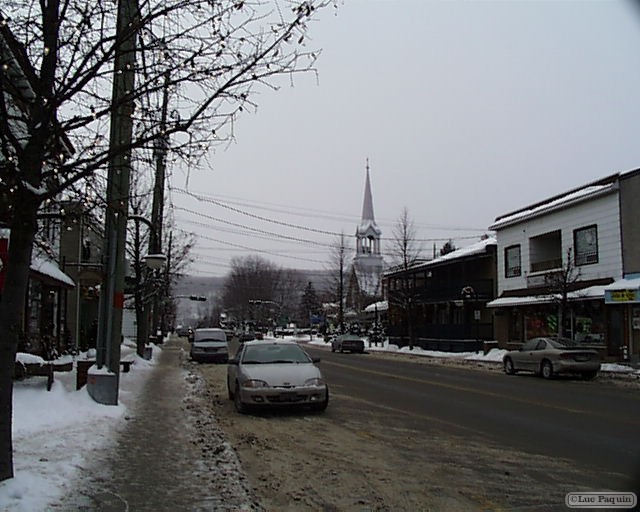
Mont-Tremblant, Quebec, January 9, 2001

Mont-Tremblant 6 Mk15

Year: 2001 (January 9, 2001)

11″ x 8.5″

Media: Canon® Pro Platinum High Gloss Photo Paper

Printers: Canon® PIXMA

Color

Art: Photo

Artist: Luc Paquin

Mont-Tremblant, Quebec, Canada

Village

A village is a clustered human settlement or community, larger than a hamlet but smaller than a town, with a population ranging from a few hundred to a few thousand. Though often located in rural areas, the term urban village is also applied to certain urban neighbourhoods. Villages are normally permanent, with fixed dwellings; however, transient villages can occur. Further, the dwellings of a village are fairly close to one another, not scattered broadly over the landscape, as a dispersed settlement.

Luc

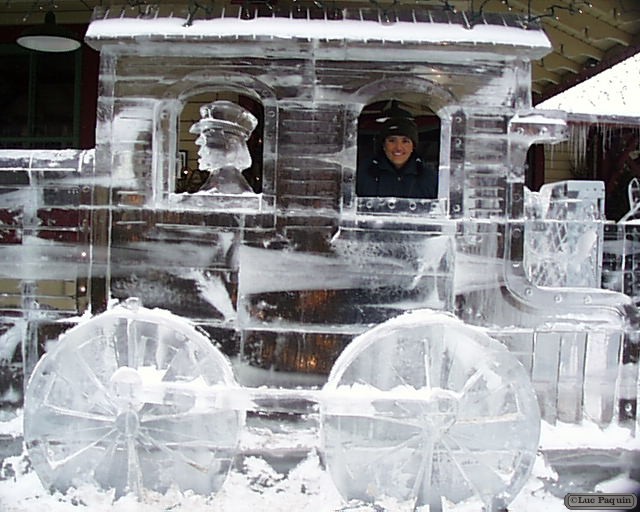
Mont-Tremblant, Quebec, January 9, 2001

Mont-Tremblant 6 Mk14

Year: 2001 (January 9, 2001)

11″ x 8.5″

Media: Canon® Pro Platinum High Gloss Photo Paper

Printers: Canon® PIXMA

Color

Art: Photo

Artist: Luc Paquin

Mont-Tremblant, Quebec, Canada

Ice Sculpture

Ice sculpture is a form of sculpture that uses ice as the raw material. Sculptures from ice can be abstract or realistic and can be functional or purely decorative. Ice sculptures are generally associated with special or extravagant events because of their limited lifetime.

The lifetime of a sculpture is determined primarily by the temperature of its environment, thus a sculpture can last from mere minutes to possibly months. There are several ice festivals held around the world, hosting competitions of ice sculpture carving.

Luc

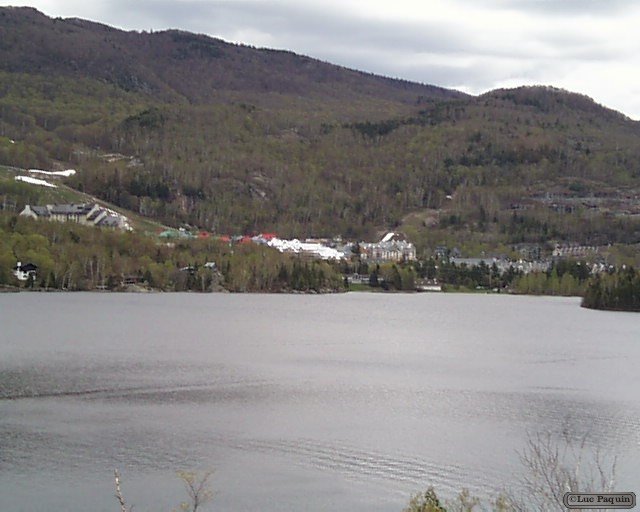
Lac-Tremblant-Nord, Quebec, May 20, 2000

Lac-Tremblant-Nord 6 Mk03

Year: 2000 (May 20, 2000)

11″ x 8.5″

Media: Canon® Pro Platinum High Gloss Photo Paper

Printers: Canon® PIXMA

Color

Art: Photo

Artist: Luc Paquin

Lac-Tremblant-Nord, Quebec, Canada

Lake Cruise Mont Tremblant offers memorable cruises two minutes from Tremblant resort. The Lake Cruise Mont Tremblant will cover more than half the lake with our captain and his crew as your hosts. The “Grand Manitou” boat is fully licensed, and can accommodate families, couples or even large groups for cocktails or catered meals. The cruise is less than a 2-hour drive from Montreal and Ottawa. Operating since 1981.

Luc

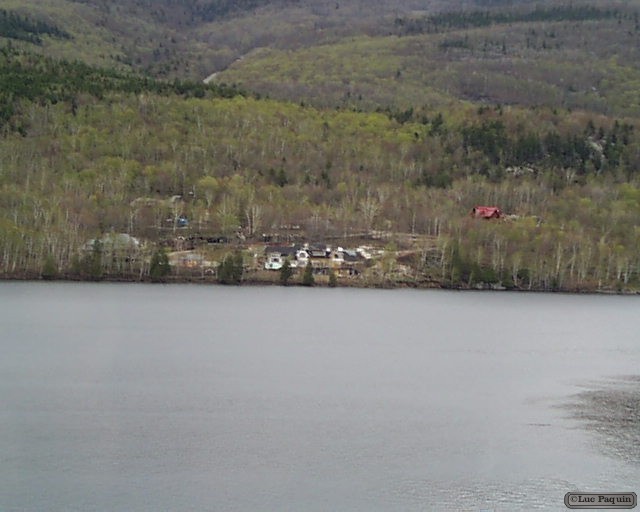
Lac-Tremblant-Nord, Quebec, May 20, 2000

Lac-Tremblant-Nord 6 Mk02

Year: 2000 (May 20, 2000)

11″ x 8.5″

Media: Canon® Pro Platinum High Gloss Photo Paper

Printers: Canon® PIXMA

Color

Art: Photo

Artist: Luc Paquin

Lac-Tremblant-Nord, Quebec, Canada

History

The municipality was formed in 1915 out of the territory of Labelle by its residents who were determined to join together in order to protect the territory.

Lac-Tremblant-Nord was among the 4 municipalities that were regrouped to form the new Town of Mont-Tremblant on November 22, 2000. But it was reinstated as a municipality on January 1, 2006.

Luc

Lac-Tremblant-Nord, Quebec, May 20, 2000

Lac-Tremblant-Nord 6 Mk01

Year: 2000 (May 20, 2000)

11″ x 8.5″

Media: Canon® Pro Platinum High Gloss Photo Paper

Printers: Canon® PIXMA

Color

Art: Photo

Artist: Luc Paquin

Lac-Tremblant-Nord, Quebec, Canada

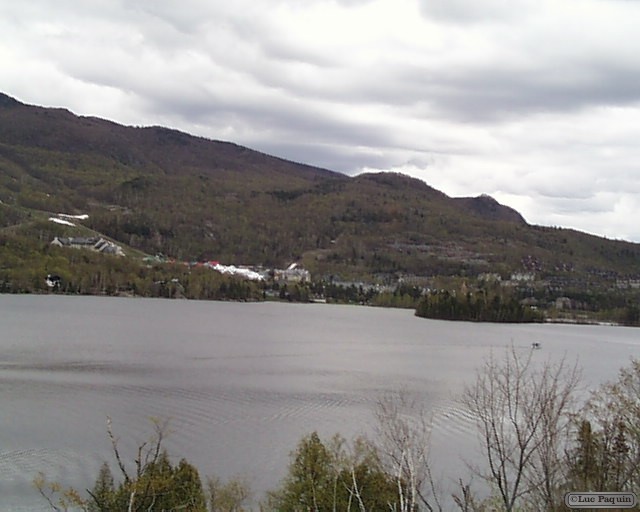
Lac-Tremblant-Nord is a small village and municipality in the Laurentides region of Quebec, Canada, part of the Les Laurentides Regional County Municipality. Its territory surrounds the northern portion of Lake Tremblant, includes Bibite Lake, and extends to Gervais Lake. The village is located on the south shore of the Lake Tremblant, a few kilometers west of the Mont Tremblant Resort.

Permanent inhabitants of Lac-Tremblant-Nord are few, but its population increases greatly during summer and winter holidays.

Luc

Dragon, June 18, 2015

Year: 2015 (June 18, 2015)

Video: Canon® PowerShot ELPH 160 Silver

Color

Art: Video, Electronics, Wood

Artist: Luc Paquin

A dragon is a legendary creature, typically with serpentine or reptilian traits, that features in the myths of many cultures. There are two distinct cultural traditions of dragons: the European dragon, derived from European folk traditions and ultimately related to Greek and Middle Eastern mythologies, and the Chinese dragon, with counterparts in Japan (namely the Japanese dragon), Korea and other East Asian countries.

The two traditions may have evolved separately, but have influenced each other to a certain extent, particularly with the cross-cultural contact of recent centuries. The English word “dragon” derives from Greek (drákon), “dragon, serpent of huge size, water-snake”.

Name

The word dragon entered the English language in the early 13th century from Old French dragon, which in turn comes from Latin draconem (nominative draco) meaning “huge serpent, dragon,” from the Greek word, drakon (genitive drakontos) “serpent, giant seafish”. The Greek and Latin term referred to any great serpent, not necessarily mythological, and this usage was also current in English up to the 18th century.

Morphology

A dragon is a mythological representation of a reptile. In antiquity, dragons were mostly envisaged as serpents, but since the Middle Ages, it has become common to depict them with legs, resembling a lizard.

Dragons are usually shown in modern times with a body like a huge lizard, or a snake with two pairs of lizard-type legs, and able to emit fire from their mouths. The European dragon has bat-like wings growing from its back. A dragon-like creature with wings but only a single pair of legs is known as a wyvern.

Luc

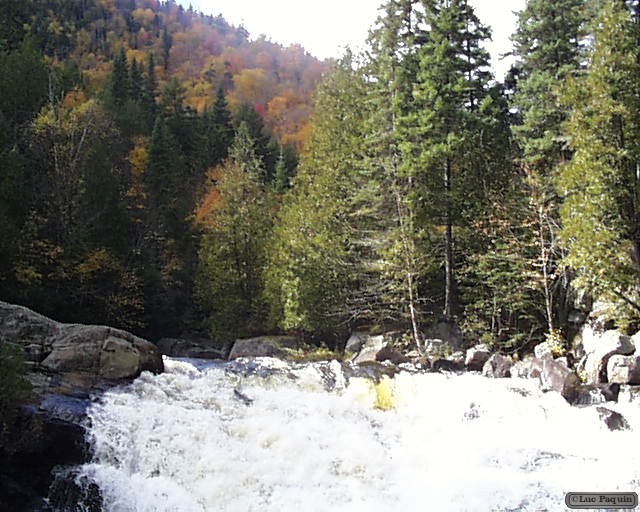
Mont-Tremblant National Park, Quebec, October 8, 2001

Mont-Tremblant National Park Mk09

Year: 2001 (October 8, 2001)

11″ x 8.5″

Media: Canon® Pro Platinum High Gloss Photo Paper

Printers: Canon® PIXMA

Color

Art: Photo

Artist: Luc Paquin

Mont-Tremblant National Park, Quebec, Canada

Mont-Tremblant National Park

Activities

Summer and Fall

  • Via Ferrata du Diable
  • Swimming
  • Golfing
  • Canoeing
  • Canoe Camping
  • Fishing
  • Hiking
  • Backpacking
  • Cycling

Winter

  • Snowshoeing
  • Backcountry Skiing (Overnight Trips)
  • Snow Walking

Luc

Mont-Tremblant National Park, Quebec, October 8, 2001

Mont-Tremblant National Park Mk08

Year: 2001 (October 8, 2001)

8.5″ x 11″

Media: Canon® Pro Platinum High Gloss Photo Paper

Printers: Canon® PIXMA

Color

Art: Photo

Artist: Luc Paquin

Mont-Tremblant National Park, Quebec, Canada

Mont-Tremblant National Park

Flora

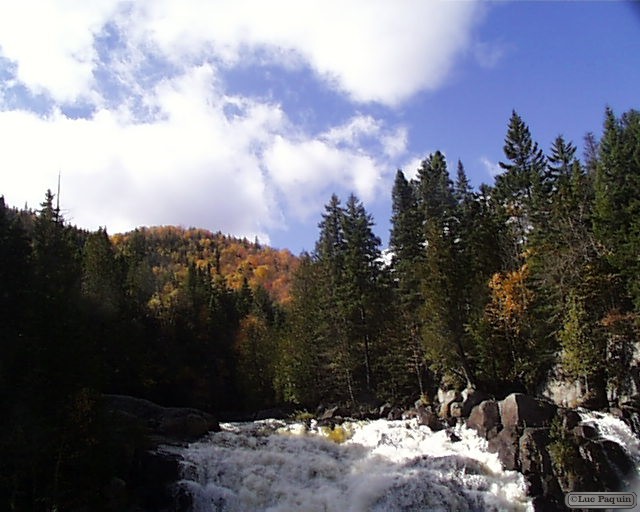
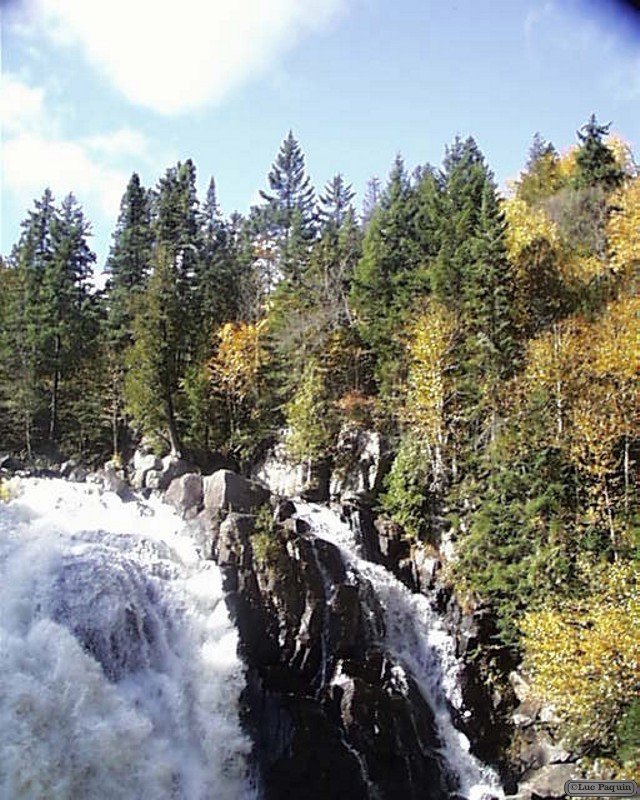
The park is part of the climax area of sugarbush to yellow birch. The tops of the hills and the valley Macaza, on the north, have the start of the range of fir yellow birch. The “Carcan” (Straitjacket) and Mount Tremblant has meanwhile a succession of forest land from the sugar maple to balsam fir.

The main tree species are the sugar maple, the red maple, the yellow birch, the white birch, the Beech, the aspen, the balsam fir, the white spruce, the red spruce and the black spruce. It also includes individuals of Hemlock, basswood and Red Oak which are at the northern limit of their distribution areas.

The park has 9 plants likely to be designated threatened or vulnerable, most of them located in the Lake Monroe. With the exception of Hieracium robinsonii and Listeria australis, watching other plants back 40 years and requires an update.

Luc

Mont-Tremblant National Park, Quebec, October 8, 2001

Mont-Tremblant National Park Mk07

Year: 2001 (October 8, 2001)

11″ x 8.5″

Media: Canon® Pro Platinum High Gloss Photo Paper

Printers: Canon® PIXMA

Color

Art: Photo

Artist: Luc Paquin

Mont-Tremblant National Park, Quebec, Canada

Mont-Tremblant National Park

Wildlife

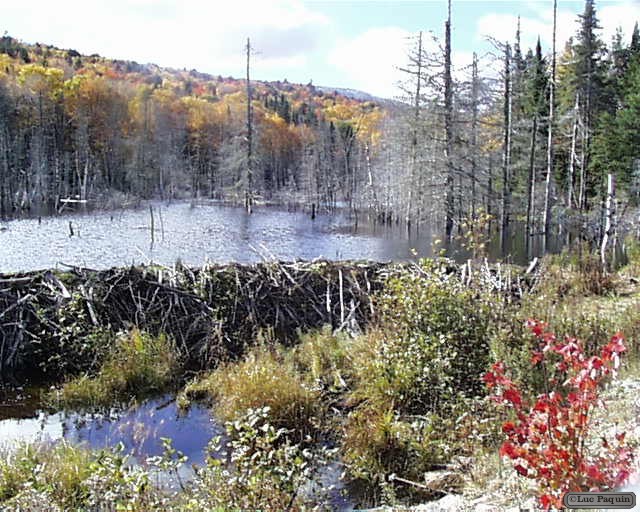
There are in the park 40 species of mammal. The more easily observable are the moose, the deer, the Eastern wolf, the red fox, the black bear, the hare, the red squirrel, the Canadian beaver, the muskrat, the river otter and the mink. Eleven of these species are likely to be designated threatened or vulnerable.

The diversity of birds is much larger with 194 species, including 25 of Warblers. Included are grouse, buntings, Thrushs, nuthatchs, peaks and Jays. It includes also some the great horned owl, the barred owl, the winged hawk, the hawk and the osprey. The park is also used as a staging area for the Canada goose. Of these species, only the bald eagle is considered vulnerable.

The park also includes seven species of reptiles and fourteen species of amphibians, mostly associated with the aquatic environment. It contains, among others the bullfrog, the green frog, the newt, the water snake, the wood turtle and the painted turtle. The wood turtle is listed as vulnerable in Quebec; and water snakes and pickerel frog are likely to be designated threatened or vulnerable.

We finally found 29 species of fishes in the park, the main species being the brook trout, which prefers headwater lakes oxygen, and pike, which prefers warmer waters.

Wolf

The Eastern Wolf is a subspecies of wolf frequenting the park and the emblem of the park. It is estimated to have in the park four or five packs and a population of 35 individuals. The park wolves mainly hunt beaver, moose and deer, which constitute the major part of their diet.

Luc

Mont-Tremblant National Park, Quebec, October 8, 2001

Mont-Tremblant National Park Mk06

Year: 2001 (October 8, 2001)

11″ x 8.5″

Media: Canon® Pro Platinum High Gloss Photo Paper

Printers: Canon® PIXMA

Color

Art: Photo

Artist: Luc Paquin

Mont-Tremblant National Park, Quebec, Canada

Mont-Tremblant National Park

History

In 1938, an American named Joe Ryan makes a ski resort on the Mont-Tremblant and makes change provincial legislation to include the use of public park and place of recreation. A research station opened at Lake Monroe in 1948 and an initial public camping born at Lake Chat 1958, which marked the kickoff for the creation of several recreational facilities in the valleys of the Devil and northern Saint-Donat. In 1961, the park changed its name to “Parc du Mont-Tremblant”.

In 1977, the province changed the philosophy of conservation and adopted the “Law on Parks”. This new law precluded commercial and industrial exploitation of natural resources in the parks. The old parks were given priority and the park was granted the status of “recreation park” in 1981, with the exception of an area of 242 square kilometres which was included in park in 1990. The northern half of the park became in turn the Rouge-Matawin Wildlife Reserve (réserve faunique Rouge-Matawin). The government revived further consultations in 1998, who produced minor boundary changes and the change in status for “conservation park” in 2000. He became the “Mont-Tremblant National Park” after abandoning the status of recreation park by the province in 2001.

Luc